
Contents
Introduction
If you have ever attended a Catholic church, you might have noticed special ceremonies happening at different times. Maybe you saw a baby getting baptized or watched teenagers receiving confirmation. These special moments are called sacraments. For Catholics, these aren’t just traditions or rituals; they are vital steps in a spiritual journey. They are signs of God’s grace that help people grow closer to Him throughout their lives.
Many people wonder if there is a specific order to these events. Does everyone do them in the same sequence? Why do some happen when you are a baby, while others happen when you are an adult? Understanding the 7 sacraments order can help make sense of how a Catholic life unfolds from birth all the way to the end of life.
In this guide, we will walk through each of the seven sacraments. We will explain what they mean, why they matter, and the typical order in which a person receives them. Whether you are learning about faith for the first time or just need a refresher, this guide is here to help you understand these beautiful milestones.
What Are the Seven Sacraments?
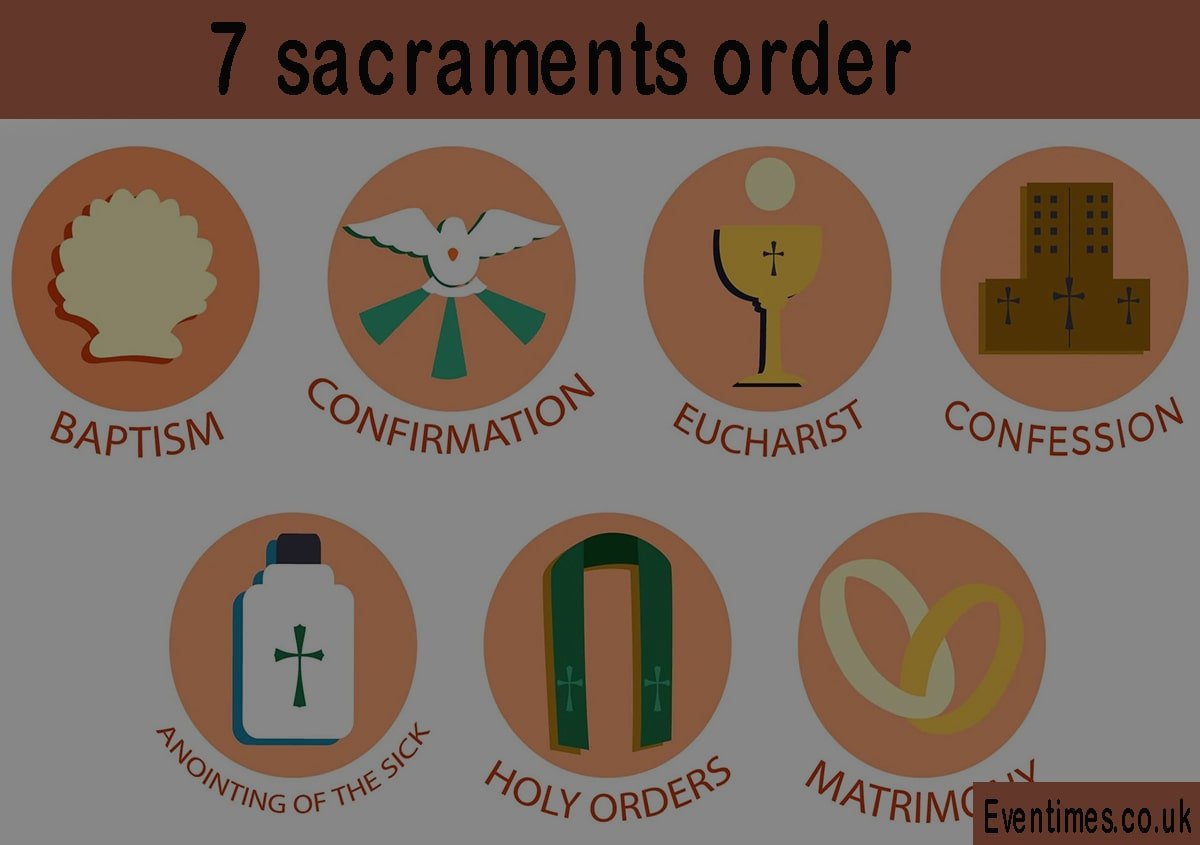
Before we jump into the specific 7 sacraments order, it is helpful to know what a sacrament actually is. In simple terms, a sacrament is a visible sign of an invisible reality. It is a way that God shares His life and love with people. The Catholic Church divides these seven sacraments into three main categories.
The first category is the Sacraments of Initiation. These are the steps that bring someone fully into the Church. They lay the foundation for a Christian life. This group includes Baptism, Confirmation, and the Eucharist (Communion).
The second category is the Sacraments of Healing. Life can be hard, and people make mistakes or get sick. These sacraments provide spiritual and physical healing. This group includes Reconciliation (Confession) and Anointing of the Sick.
The third category is the Sacraments of Service (or Vocation). These are for people who want to dedicate their lives to serving others in a specific way. This group includes Matrimony (Marriage) and Holy Orders.
Understanding these groups helps us see the bigger picture. The 7 sacraments order isn’t just a checklist. It is a path that supports a person through every stage of life, from beginning to end.
1. Baptism: The First Step of Faith
The very first sacrament in the 7 sacraments order is Baptism. You cannot receive any other sacrament until you have been baptized. This is the gateway to life in the Spirit. For most Catholics, this happens when they are infants. Parents bring their baby to the church, and a priest or deacon pours water over the baby’s head while saying specific prayers.
Baptism washes away original sin. Catholics believe that everyone is born with a fallen nature because of the first sin of Adam and Eve. Baptism cleanses the soul and welcomes the person into the family of God. It is a moment of pure joy and new beginnings.
However, Baptism isn’t just for babies. Adults who want to become Catholic also get baptized. This usually happens at the Easter Vigil service. Whether you are a tiny baby or a grown-up, Baptism is always the starting line. It marks you as a child of God forever. Once you are baptized, you belong to Christ, and nothing can change that. It sets the stage for everything else that follows in the 7 sacraments order.
2. Reconciliation: Finding Forgiveness
The next step for most Catholic children is Reconciliation. You might know this as Confession or Penance. This usually happens when a child is around seven years old, often in second grade. This is considered the “age of reason,” meaning the child is old enough to know the difference between right and wrong.
Reconciliation is all about healing. We all make mistakes. We all do things we shouldn’t do. In the Catholic faith, these mistakes are called sins. Sin hurts our relationship with God and with other people. Reconciliation is the way to fix that relationship.
During this sacrament, the person meets with a priest privately. They confess their sins and express sorrow for them. The priest, acting in the person of Jesus, offers forgiveness and absolution. It can be a little scary to tell someone your mistakes, but the feeling afterward is wonderful. It feels like a heavy weight has been lifted off your shoulders. This sacrament prepares the soul to receive the Holy Eucharist, which is the next big step in the 7 sacraments order.
3. Holy Eucharist: Receiving the Body of Christ
First Holy Communion, or the Holy Eucharist, is a major milestone. It usually happens shortly after First Reconciliation, often in the same year (second grade). For many families, this is a huge celebration with fancy clothes, parties, and lots of photos. But the real importance is spiritual.
Catholics believe that during Mass, the bread and wine truly become the Body and Blood of Jesus Christ. This isn’t just a symbol; it is the real presence of Jesus. When you receive Communion, you are receiving Jesus Himself. It is the most intimate way to be connected to God.
The Eucharist is unique in the 7 sacraments order because it is the one sacrament you can receive every single day if you want to. Baptism and Confirmation happen only once. But the Eucharist is spiritual food for the journey. It gives people the strength to live good lives and love others. It is the heart of Catholic life.
4. Confirmation: Sealing the Spirit
Confirmation is the final Sacrament of Initiation. In the traditional 7 sacraments order used in many places today, this often happens when a person is a teenager, usually between 8th and 10th grade. However, the timing can vary depending on the local bishop.
Think of Confirmation as a spiritual boost. In Baptism, your parents made promises for you. In Confirmation, you speak for yourself. You confirm that you want to be a Catholic and follow Jesus. During the ceremony, the bishop anoints your forehead with holy oil called chrism.
This sacrament gives you a special outpouring of the Holy Spirit. It is like the first Pentecost when the apostles received the Holy Spirit and became brave enough to share their faith. Confirmation gives you the courage to live your faith openly and defend it. It completes the process of becoming a full member of the Catholic Church.
5. Matrimony: A Covenant of Love
After the Sacraments of Initiation, the path diverges based on a person’s life choices. One of the beautiful paths is Matrimony, or Marriage. This is part of the Sacraments of Service. It usually happens when two adults decide to commit their lives to each other.
In the Catholic Church, marriage is more than a legal contract. It is a covenant. A covenant is a sacred promise that mirrors God’s love for His people. The couple promises to love and be faithful to each other until death. They also promise to be open to having children and raising them in the faith.
Matrimony gives the couple special grace to help them through the challenges of life. Marriage isn’t always easy. There are good days and bad days. The grace of this sacrament helps husbands and wives forgive each other, serve each other, and build a holy family. In the 7 sacraments order, this is a vocation that helps the world by creating loving homes.
6. Holy Orders: Answering the Call to Serve
Not everyone gets married. Some men feel a different calling. They feel God calling them to serve the Church as deacons, priests, or bishops. This sacrament is called Holy Orders. Like Matrimony, it is a Sacrament of Service.
Men who receive Holy Orders dedicate their entire lives to God and the Church. A deacon serves the community and helps the priest. A priest celebrates Mass, hears confessions, and takes care of the spiritual needs of his parish. A bishop leads a larger area called a diocese and has the authority to ordain new priests.
This sacrament leaves a permanent mark on the soul, just like Baptism and Confirmation. A priest is a priest forever. It is a life of sacrifice, but also a life of great joy. Without Holy Orders, we wouldn’t have the Eucharist or Reconciliation, because only priests can perform those sacraments. Holy Orders ensures that the 7 sacraments order continues for future generations.
7. Anointing of the Sick: Healing and Comfort
The final sacrament we will discuss is the Anointing of the Sick. In the past, this was often called “Last Rites” because it was only given to people who were dying. Today, we understand it differently. While it is certainly for those at the end of life, it is also for anyone who is seriously ill or facing major surgery.
This sacrament brings spiritual and sometimes physical healing. A priest anoints the sick person with holy oil and prays over them. It gives the person peace and courage to face their illness. It reminds them that they are not alone and that God is with them in their suffering.
If a person is dying, this sacrament includes special prayers to prepare them for heaven. It forgives sins if the person cannot speak to confess. It is a beautiful way to wrap up the earthly journey in the 7 sacraments order. It provides comfort to both the sick person and their family.
Why Is the Order Different Sometimes?
You might hear about people receiving sacraments in a different order. This can be confusing! The 7 sacraments order we described above (Baptism -> Reconciliation -> Communion -> Confirmation) is the most common for children growing up in the Catholic Church today.
However, the order can change. For example, in the early Church, all three sacraments of initiation (Baptism, Confirmation, Eucharist) were given at the same time, even to babies. Some Eastern Catholic Churches still do this today!
Also, adults who join the Church through a program called RCIA (Rite of Christian Initiation of Adults) receive Baptism, Confirmation, and Eucharist all in one Easter Vigil mass. So for them, the order is bunched together.
Sometimes, a bishop might decide to restore the “original order” where Confirmation comes before First Communion. It varies by location. But regardless of the sequence, the meaning remains the same. Each sacrament is a gift of grace.
How Sacraments Connect Us to God
It is easy to get caught up in the rules and the rituals. But the most important thing to remember about the 7 sacraments order is the connection it creates. God wants to be close to us. He knows we are physical beings. We need to see, touch, and hear things to understand them.
That is why sacraments use physical things like water, oil, bread, wine, and human touch. They take ordinary things and make them holy. When water is poured in Baptism, we see the cleaning. When bread is broken in the Eucharist, we see the sacrifice. When oil is rubbed on the forehead in Confirmation, we feel the sealing.
These physical signs help us grasp the invisible reality of God’s love. They are like anchors that hold us steady through the storms of life. From the moment we are born until the moment we take our last breath, the sacraments are there to support us.
The Role of Family in the Sacraments
Family plays a huge role in the 7 sacraments order. Parents are the first teachers of the faith. They are the ones who ask for Baptism for their children. They help prepare them for Reconciliation and Communion. They stand by them as sponsors or supporters during Confirmation.
The sacraments are often family celebrations. They bring relatives together. Grandparents, aunts, uncles, and cousins gather to witness these holy moments. It strengthens the bonds of the family and the wider community.
Even Matrimony and Holy Orders are about family. Marriage creates a new family. Holy Orders serves the family of God, the Church. Anointing of the Sick often happens with family gathered around the bedside. The sacraments are never just private events; they are community events.
Common Questions About the 7 Sacraments Order
Can you receive the sacraments in any order?
Generally, no. You must be baptized first. Baptism is the door to all the other sacraments. Without it, you cannot receive the others. The usual order for children is Baptism, Reconciliation, Eucharist, and then Confirmation. However, adults entering the church receive Baptism, Confirmation, and Eucharist at the same time.
Why do some people get Confirmed before Communion?
This is actually the older, traditional order! In recent years, some dioceses (church regions) have moved Confirmation back to an earlier age to restore this original sequence. They believe Confirmation completes Baptism and should happen before receiving the Eucharist.
Is Marriage considered a sacrament for everyone?
In the Catholic Church, marriage is a sacrament when it is between two baptized Christians. If two non-Christians get married, the Church recognizes it as a valid natural marriage, but not a sacrament in the strict sense.
Can a priest ever get married?
In the Roman Catholic Church, priests usually cannot get married. They take a vow of celibacy to devote themselves fully to God. However, there are some exceptions, such as married ministers from other denominations who convert to Catholicism and become priests. In Eastern Catholic Churches, married men can be ordained as priests.
How often can you go to Confession?
You can go to Reconciliation as often as you need! The Church recommends going at least once a year during Lent. However, many people find it helpful to go once a month or whenever they feel the need for spiritual healing.
What happens if you miss a sacrament?
If you missed a sacrament like Confirmation as a teenager, it is never too late! Many parishes offer adult confirmation classes. You can catch up on missed sacraments at any age. God’s grace has no expiration date.
Finding Your Place in the Story
The 7 sacraments order is more than just a list of religious duties. It is a roadmap for a life lived with God. It marks the most important moments of our human experience: birth, growth, mistakes, meals, love, service, and sickness.
By participating in the sacraments, Catholics believe they are participating in the life of Jesus Himself. They are walking the path He walked. They are receiving the love He wants to give.
Whether you are preparing for a sacrament yourself, helping a child prepare, or just curious about the faith, remember that these are gifts. They are open doors to a deeper relationship with the divine. They are signs that God is with us, every step of the way.
