
Contents
Introduction
Have you ever noticed how the seasons change? The world turns from green to gold, then to white, and back to green again. This beautiful cycle is something people have celebrated for thousands of years. They call it the Wheel of the Year. It’s a special calendar that marks important moments in nature’s journey. Think of it like a big circle that follows the sun. It has eight special holidays, or sabbats, that honor the changing seasons. Each stop on this wheel has its own story, traditions, and magic.
Following the Wheel of the Year helps us connect with the natural world. It reminds us that life is always moving and changing. Just like the seasons, we have times for rest, growth, and celebration. This ancient calendar isn’t just about farming or old traditions. It’s a way to live more in tune with the Earth. It helps us appreciate the small wonders around us every day. Whether it’s the first flower of spring or the first snowflake of winter, each moment is special.
In this guide, we’ll explore the eight festivals of the Wheel of the Year. We’ll learn about each sabbat and what it represents. You’ll discover the traditions, symbols, and simple ways you can celebrate. This journey will help you understand the beautiful rhythm of the seasons. It’s a wonderful way to bring a little bit of nature’s magic into your own life. Get ready to explore this ancient and beautiful cycle.
What is the Wheel of the Year?
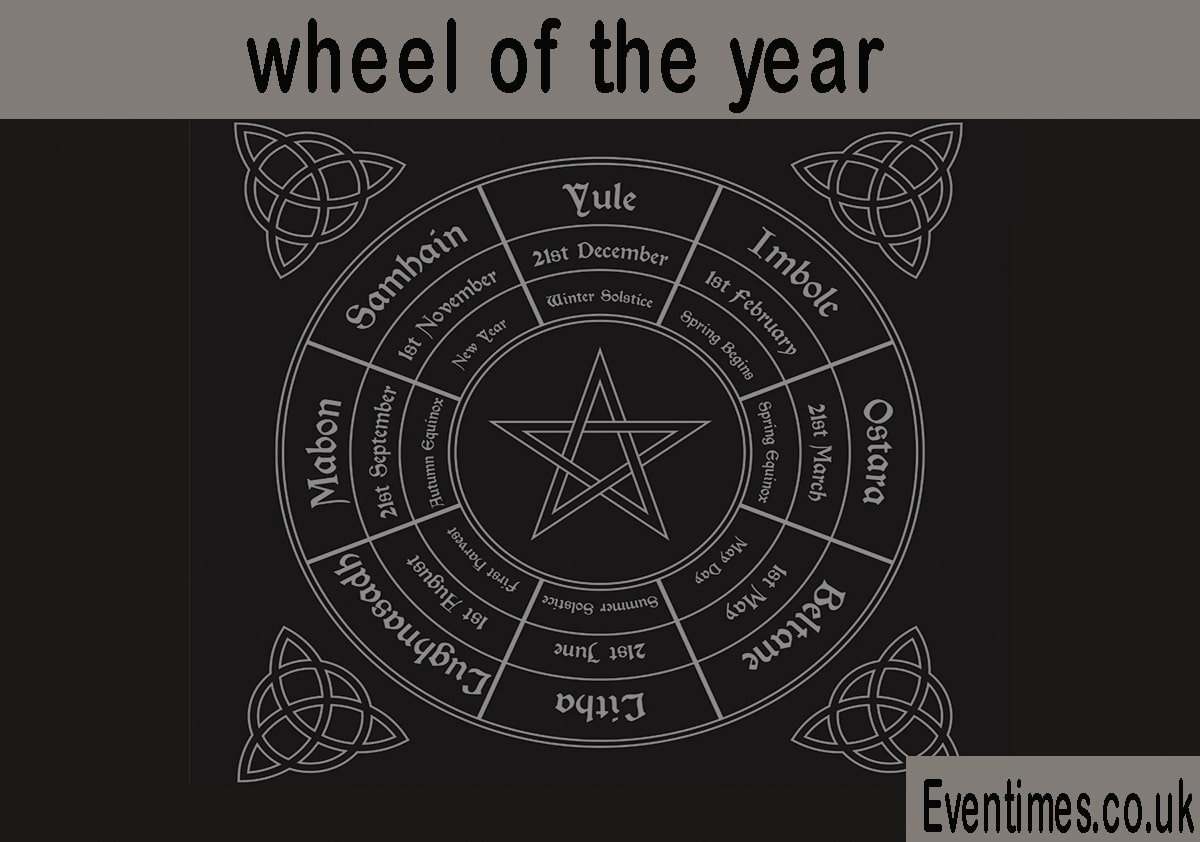
The Wheel of the Year is a calendar that follows the seasons. It’s based on the cycles of the sun. Many modern Pagans and Wiccans use it to guide their spiritual practice. The wheel has eight festivals, called sabbats. These sabbats are like special holidays. They mark important points in the year. Four of them are major solar events. These are the solstices and equinoxes. The other four are cross-quarter days. These fall midway between the solar events. They are often linked to old agricultural festivals from Celtic traditions. It’s a way of honoring the Earth’s journey around the sun.
Each festival on the Wheel of the Year has its own unique energy and meaning. The sabbats celebrate the endless cycle of life, death, and rebirth. For example, Yule marks the darkest day of the year but also the return of the sun. Beltane celebrates the peak of spring and the fertility of the land. By observing these festivals, people feel more connected to nature. It’s a way to notice and appreciate the subtle shifts in the world around us. It helps us remember that we are part of this big, beautiful cycle. The wheel teaches us about balance and the flow of life.
The Eight Festivals, or Sabbats
The Wheel of the Year is divided into eight sabbats. Each one represents a different phase of the seasonal cycle. Four are “major” sabbats, also known as cross-quarter days. These are Samhain, Imbolc, Beltane, and Lughnasadh. They have roots in ancient Celtic festivals. The other four are “minor” sabbats. These are the solstices and equinoxes: Yule, Ostara, Litha, and Mabon. These mark the astronomical turning points of the sun. Together, these eight festivals create a balanced rhythm throughout the year. They guide people in celebrating nature’s patterns.
Think of the sabbats as eight spokes on a great wheel. Each spoke marks a special time for reflection and celebration. At Yule, we welcome the return of light during the longest night. At Litha, we celebrate the longest day and the sun’s full power. The equinoxes, Ostara and Mabon, are times of balance between day and night. The cross-quarter days mark the peaks of the seasons. Beltane is a joyous festival of life and fertility. Samhain is a time to honor our ancestors and the end of the harvest. Each sabbat offers a unique opportunity to connect with the Earth and its cycles.
Yule: The Winter Solstice
Yule is the Winter Solstice, usually celebrated around December 21st in the Northern Hemisphere. It’s the longest night of the year. This might sound a bit gloomy, but Yule is actually a festival of hope and light. It marks the turning point of the Wheel of the Year. After this day, the sun begins to return. The days will slowly start getting longer again. That’s why Yule is often called the “return of the sun.” It’s a time to celebrate the promise of new light and warmth. It’s a reminder that even in the darkest times, light will always come back.
Many Yule traditions will feel very familiar. Things like decorating a Yule tree, lighting candles, and sharing meals with loved ones are all part of the celebration. The Yule log is another important symbol. A special log is burned in the fireplace to honor the sun’s return. People often decorate their homes with evergreens, holly, and mistletoe. These plants stay green even in winter. They symbolize life and resilience. Yule is a quiet, reflective time. It’s perfect for gathering with family and friends. We can share stories, sing songs, and feel thankful for the light that is coming back into our lives.
Imbolc: The Promise of Spring
Imbolc happens around February 1st. It’s the halfway point between the Winter Solstice and the Spring Equinox. This sabbat is all about the first signs of spring. The world is still cold, but you can feel a change in the air. You might see the first snowdrops poking through the snow. The days are getting noticeably longer. Imbolc is a festival of hope and purification. It’s a time to clean out the old and make way for the new. It’s like the Earth is slowly waking up from its long winter sleep.
Imbolc is strongly connected to the goddess Brigid. She is a goddess of fire, poetry, and healing. A popular tradition is to make a Brigid’s cross out of rushes or straw. These crosses are hung in the home for protection. Lighting candles is another important part of Imbolc. The flames represent the returning warmth of the sun. It’s a good time for a bit of spring cleaning, both in your home and in your heart. You can think about your goals for the year ahead. Imbolc reminds us that spring is just around the corner. It fills us with hope for the new growth to come.
Ostara: The Spring Equinox
Ostara is the Spring Equinox, which falls around March 21st. On this day, day and night are of equal length. This festival is all about balance. After Ostara, the days will be longer than the nights. It’s a time of new beginnings and fresh energy. The Earth is bursting with life. Flowers are blooming, trees are budding, and animals are waking up. Ostara is a celebration of fertility and renewal. It’s a joyful time that feels full of possibility. The world is reborn, and we can be, too.
Many Ostara traditions are probably familiar to you. The name Ostara is linked to the goddess Eostre, from whom we get the word “Easter.” Symbols like eggs and rabbits are very important. Eggs represent new life and potential. Decorating eggs is a fun way to celebrate. Planting seeds is another wonderful Ostara activity. It’s a physical way to connect with the theme of new growth. You can plant seeds in your garden or in a small pot indoors. Ostara is a great time to start new projects and set intentions. It’s a day to embrace the energy of renewal and celebrate the arrival of spring.
Beltane: The Fire Festival
Beltane is celebrated on May 1st. It is the halfway point between the Spring Equinox and the Summer Solstice. Beltane is a big, joyful fire festival. It marks the peak of spring and the beginning of summer. The Earth is full of life and energy. Flowers are everywhere, and everything is green and lush. Beltane celebrates fertility, passion, and vitality. It’s a time for joy, dancing, and community. The energy of Beltane is vibrant and exciting. It’s about celebrating the life force that runs through all living things.
One of the most famous Beltane traditions is the Maypole. People dance around a tall pole decorated with ribbons. The weaving of the ribbons symbolizes the union of the god and goddess, and the fertility of the Earth. Bonfires are also a huge part of Beltane. People would historically leap over the bonfire for purification and to bring good fortune. It’s a time to celebrate with friends and family. You can make flower crowns, have a picnic, or just spend time outside enjoying nature’s beauty. Beltane is a powerful reminder of the passion and creativity that comes with the vibrant season of early summer.
Litha: The Summer Solstice
Litha is the Summer Solstice, usually around June 21st. It’s the longest day of the year. The sun is at its most powerful. This is a time of great energy, light, and warmth. Nature is at its peak. The gardens are full, and the world is alive with activity. Litha is a celebration of the sun’s strength and the abundance of the Earth. It’s a time to be outside, enjoying the sunshine and connecting with nature. It’s a festival of joy, gratitude, and fulfillment. The sun has reached its peak power, and we celebrate its life-giving force.
On Litha, people love to celebrate outdoors. It’s a perfect day for a picnic, a hike, or a swim. Building a bonfire is a common tradition, honoring the fire and light of the sun. People gather with friends to sing, dance, and celebrate. It’s also a time to work with herbs. Many magical herbs are said to be most potent when picked on the Summer Solstice. You can make sun tea by leaving a jar of water and herbs out in the sun. Litha is a joyful, active festival. It’s a time to be grateful for the sun’s light and the abundance it brings into our lives.
Lughnasadh (Lammas): The First Harvest
Lughnasadh, also known as Lammas, is celebrated on August 1st. It’s the first of three harvest festivals in the Wheel of the Year. It marks the beginning of the harvest season. The days are still long and warm, but there’s a hint that autumn is on its way. This sabbat is about celebrating the first fruits of the harvest. It’s a time to be thankful for the food the Earth has provided. Lughnasadh honors the god Lugh, a master of many skills. It’s a time to celebrate our own skills and talents, too.
The name Lammas means “loaf mass.” A central tradition of this festival is baking bread. People would take the first grains of the harvest and bake them into a special loaf. This loaf would then be shared with the community. It’s a symbol of gratitude and sharing. You can celebrate by baking your own bread or sharing a meal with loved ones. It’s also a time for games and friendly competitions, in honor of Lugh. Lughnasadh is a time to reflect on what you have “harvested” in your own life so far this year. It’s a moment of gratitude before the hard work of the main harvest begins.
Mabon: The Autumn Equinox
Mabon is the Autumn Equinox, which falls around September 21st. Just like at Ostara, day and night are equal in length. Mabon is the second harvest festival. It’s a time of balance and gratitude. The main harvest is in full swing. Farmers are gathering the crops that will sustain them through the winter. The leaves on the trees are starting to change color. There’s a crispness in the air. Mabon is a time to give thanks for the abundance of the Earth. It’s a time to share our blessings with others.
A big part of Mabon is the feast. It’s a time to gather with family and friends and share a meal made from seasonal foods. Things like apples, pumpkins, squash, and root vegetables are perfect for a Mabon feast. It’s a time for honoring the balance between light and dark. You can go for a walk in nature and collect fallen leaves or acorns to decorate your home. Mabon is also a time for reflection. We can look back on the year and be grateful for what we have accomplished. It’s a time of rest after the hard work of growing and a time to prepare for the quiet winter ahead.
Samhain: The Witches’ New Year
Samhain is celebrated on October 31st. It is the final harvest festival and the end of the Wheel of the Year. For many Wiccans and Pagans, Samhain is considered the Witches’ New Year. It marks the end of the light half of the year and the beginning of the dark half. The harvest is complete, and the Earth is preparing for winter. Samhain is a time when the veil between our world and the spirit world is at its thinnest. This makes it a powerful time for divination and for honoring ancestors who have passed on.
Samhain traditions may sound very familiar to Halloween. Carving pumpkins, dressing up in costumes, and bobbing for apples all have roots in ancient Samhain customs. A key part of Samhain is honoring the dead. People often set up an altar with photos of their ancestors. They might leave a plate of food out for the spirits, known as a “dumb supper.” It’s a time for reflection and letting go. As the year ends, we can think about what we need to release. Samhain is a time to look inward, to honor the cycle of life and death, and to prepare for the quiet introspection of winter.
Living in Tune with the Seasons
Following the Wheel of the Year is a beautiful way to live more consciously. It helps you notice the small, magical changes happening in the world around you. You start to appreciate the first bud of spring and the last leaf of autumn. It connects you to the ancient rhythms of the Earth. You don’t need to have elaborate rituals to celebrate. Simply taking a walk in nature, cooking a seasonal meal, or lighting a candle with intention can be a powerful way to honor the sabbats. It’s about being present and grateful for each phase of life.
Living with the seasons can also help you understand your own inner cycles. We all have times of growth, times of abundance, and times of rest. The Wheel of the Year teaches us that all of these phases are natural and necessary. It encourages us to embrace the quiet rest of winter just as much as the joyful energy of summer. By aligning our lives with this ancient cycle, we can find more balance, peace, and connection. It’s a simple yet profound way to bring a sense of magic and meaning into our everyday lives.
What’s Your Next Step?
Exploring the Wheel of the Year is a journey of connection. It connects us to nature, to our ancestors, and to ourselves. Each festival offers a unique lesson and a special kind of magic. As you’ve learned about the eight sabbats, maybe one or two called to you. Perhaps you feel drawn to the joyful fires of Beltane or the quiet reflection of Yule. The beauty of this path is that you can start anywhere. You can begin by simply noticing the season you’re in right now. What do you see, feel, and smell? How can you honor this moment?
The Wheel of the Year is not just an ancient calendar; it’s a living, breathing guide. It invites you to slow down and appreciate the world around you. It helps you find meaning in the cycles of life. Whether you are a seasoned practitioner or just curious, there is always more to discover. Let the wheel guide you toward a deeper connection with the Earth and a more magical way of life.
Frequently Asked Questions
Do I have to be Wiccan or Pagan to follow the Wheel of the Year?
Not at all! The Wheel of the Year is based on the natural cycles of the seasons. Anyone who wants to feel more connected to nature can enjoy it. You can adapt the celebrations to fit your own beliefs.
What if I live in the Southern Hemisphere?
If you live in the Southern Hemisphere, the seasons are opposite. So, you would celebrate Beltane in October and Samhain in April. The Wheel of the Year is simply flipped to match your local seasons.
How can I start celebrating the sabbats?
Start small! For the next sabbat, you could try cooking a seasonal meal. You could also go for a walk and notice what’s happening in nature. Lighting a candle with a specific intention is another simple, beautiful way to celebrate.
Are the dates for the sabbats always the same?
The cross-quarter days (Imbolc, Beltane, Lughnasadh, Samhain) have fixed dates. However, the solstices and equinoxes can vary by a day or two each year. It’s always good to check a current calendar.
Can kids participate in celebrating the Wheel of the Year?
Yes, absolutely! The Wheel of the Year is wonderful for children. They can help decorate, bake special foods, or make nature crafts. It’s a great way to teach them about the seasons and the natural world.
What is the difference between a sabbat and an esbat?
Sabbats are the eight solar festivals of the Wheel of the Year. Esbats are smaller, more frequent rituals. They are usually held on the full moon or new moon to celebrate the cycles of the moon.
