
Contents
Introduction
Have you ever seen a firearm and wondered about all its different parts? One part you might have heard of is a barrel shroud. It sounds technical, but the idea behind it is pretty simple. A barrel shroud is just a cover that goes over the barrel of a gun. Its main job is to protect your hands from getting burned. Barrels can get very hot after firing a few rounds. This cover keeps you safe while you’re shooting. It’s a key safety feature on many modern firearms. In this guide, we’ll explain everything you need to know about what a barrel shroud is, what it does, and why it’s important. You’ll learn how this simple part can make shooting safer and more comfortable.
A barrel shroud has a very important job. Think about how hot a pan gets on the stove. A gun barrel gets hot in the same way, but much faster. When you shoot a gun, the explosion that sends the bullet flying creates a lot of heat. This heat transfers directly to the metal barrel. If you were to accidentally touch it, you could get a serious burn. A barrel shroud acts as a heat shield. It puts a protective layer between your hand and the hot barrel. This is especially useful on smaller firearms where your hand is naturally closer to the barrel. So, this part isn’t just for looks; it’s a practical safety device. It allows you to hold and control the firearm properly without worrying about the heat.
Many people get confused about what a barrel shroud actually does. There are a lot of myths out there, especially from movies and TV shows. Some people think a barrel shroud makes a gun more dangerous or powerful. That’s just not true. It doesn’t change how the gun fires, how fast the bullets go, or how powerful the gun is. Its purpose is purely protective. Imagine holding a hot cup of coffee. You use a cardboard sleeve to keep from burning your hand. A barrel shroud works in the exact same way for a firearm. It’s a simple, smart solution to a real problem. Understanding its true function helps everyone have a more informed conversation about firearm safety and components.
In this article, we’re going to break down everything about the barrel shroud. We will look at different types, the materials they’re made from, and why they are included on certain guns. We will also talk about the laws surrounding them and clear up some common misconceptions. I’ve spent years handling different firearms and learning about each component. My goal is to share that experience with you in a way that’s easy to understand. By the end, you’ll have a clear picture of this important firearm part. You’ll know why it’s there and how it contributes to a safer shooting experience for everyone. Let’s get started and learn all about the barrel shroud.
The Main Purpose: Protecting Your Hands
The number one job of a barrel shroud is to protect the shooter’s hands from burns. When a firearm is fired, the barrel heats up very quickly. This is because of the controlled explosion that propels the bullet. After just a few shots, the barrel can become hot enough to cause severe skin burns on contact. This is a big safety risk, especially during training or competitions where many rounds are fired in a short time. A barrel shroud is a physical barrier that covers the hot barrel. This allows you to grip the firearm safely and maintain control without the risk of injury. It’s a simple but incredibly effective safety feature. Without it, the risk of accidental burns would be much higher on many popular firearm designs.
Think of it like this: if you’re cooking, you use an oven mitt to pull a hot dish out of the oven. You wouldn’t grab the hot pan with your bare hands. The oven mitt is a tool that protects you from the heat. A barrel shroud does the same thing for a shooter. It’s a piece of safety equipment built right into the firearm. This is especially important for semi-automatic firearms, where a shooter might fire many rounds quickly. The heat builds up fast. The shroud ensures that even when the barrel is scorching hot, the user can maintain a firm, safe grip on the firearm’s fore-end. This focus on safety is why so many modern firearms incorporate a barrel shroud into their design. It makes shooting more comfortable and, most importantly, much safer.
How a Barrel Shroud Works
So, how does a barrel shroud actually protect you from the heat? It works through a few simple principles of heat transfer. The shroud is attached to the firearm but typically has a gap between it and the barrel itself. This air gap is a very important part of the design. Air is not a very good conductor of heat. This means it slows down the transfer of heat from the hot barrel to the outer shroud that you touch. The heat from the barrel has to travel through this air gap before it can reach the shroud. This process, called convection, is much less efficient than direct conduction, which would happen if you touched the barrel directly.
Many barrel shrouds also have holes or vents in them. These vents serve a crucial purpose. They allow air to circulate around the barrel. As the barrel heats the air inside the shroud, this hot air rises and escapes through the vents. Cooler, denser air is then drawn in from the bottom. This continuous airflow helps to cool the barrel down faster than if it were enclosed in a solid tube. This process is known as air cooling. So, the barrel shroud not only blocks you from touching the hot barrel, but it also helps the barrel cool off more efficiently. This dual function makes it a very clever piece of engineering that enhances both safety and performance.
Common Materials Used for Shrouds
Barrel shrouds can be made from a variety of materials. The choice of material depends on factors like weight, durability, heat resistance, and cost. One of the most common materials is aluminum. Aluminum is a great choice because it’s lightweight, strong, and relatively inexpensive. It’s also good at dissipating heat. High-grade aluminum alloys, often the same kind used in aircraft, are frequently used to make durable and reliable shrouds. These shrouds can be finished with a process called anodizing, which creates a hard, protective layer that resists scratches and corrosion. This makes the barrel shroud last longer and look good.
Another popular material is polymer, which is a type of high-strength plastic. Modern polymers are incredibly tough and resistant to heat. They have the advantage of being even lighter than aluminum. This can be important for shooters who want to keep their firearm as light as possible for better handling and maneuverability. Polymers also don’t transfer heat as readily as metal, which adds another layer of insulation for the shooter’s hands. Sometimes, you’ll see shrouds made from steel, especially on military-style firearms where maximum durability is the priority. While steel is heavier, it is extremely strong and can withstand rough use. The material chosen for a barrel shroud is always a balance between keeping the user safe and meeting the specific needs of the firearm’s design.
Different Types and Styles
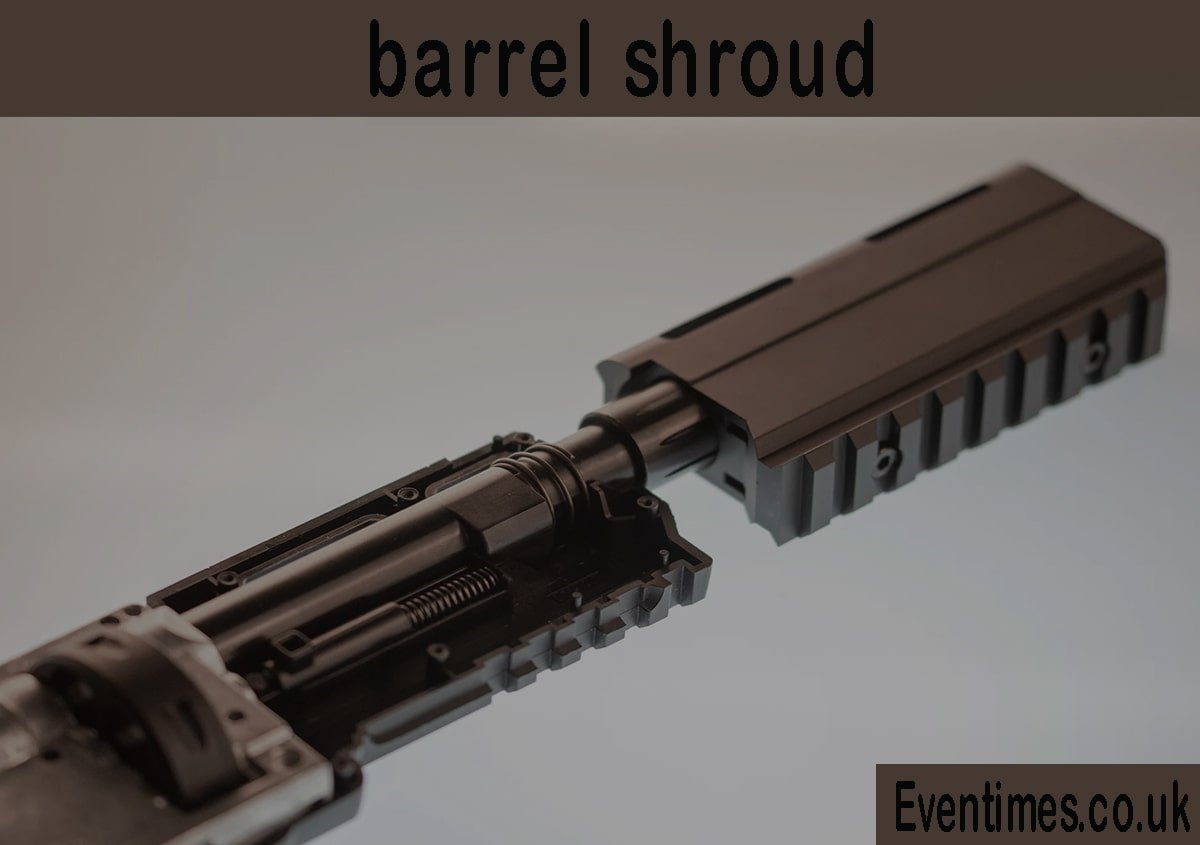
Barrel shrouds come in many different shapes and styles. The design often depends on the type of firearm it’s made for. For example, the handguard on an AR-15 rifle is a type of barrel shroud. These can range from simple, round tubes to more complex designs with rails for mounting accessories. These rails, like Picatinny or M-LOK systems, allow shooters to attach things like lights, lasers, and vertical grips. This makes the handguard a versatile platform that adds function beyond just being a heat shield. The shroud becomes a central part of the firearm’s modularity.
On pistols, a barrel shroud might be part of the frame or slide assembly. A good example is the one on the TEC-9 pistol. It’s a perforated tube that surrounds the barrel, giving the shooter a place to hold the front of the firearm. This was a key feature because of the firearm’s design. Without it, there would be no safe place to put your support hand. The style of the shroud can also be a big part of the firearm’s look. Some are sleek and minimalist, while others have aggressive-looking vents and cuts. But no matter the style, the primary function remains the same: to protect the shooter’s hand from the hot barrel.
Is a Barrel Shroud a “Silencer”?
One of the biggest myths about a barrel shroud is that it’s the same thing as a suppressor, also known as a silencer. This is completely false. A barrel shroud has no effect on the sound of a gunshot. Its only job is to be a heat shield. A suppressor, on the other hand, is a device that attaches to the muzzle of the barrel and is designed to reduce the noise and muzzle flash of a gunshot. It works by trapping and slowing down the hot gases that exit the barrel when a shot is fired. This is a completely different function and design.
The confusion often comes from movies and media where the terms are used incorrectly. It’s important to understand the difference. Suppressors are heavily regulated by federal law under the National Firearms Act (NFA). You need to go through an extensive background check, pay a special tax, and register the device with the government. A barrel shroud, however, is just a piece of metal or plastic. In most places, it’s an unregulated firearm part, just like a stock or a grip. Confusing the two can lead to misunderstandings about firearm laws and technology. A barrel shroud is a safety feature, not a sound-reducing device.
Legal Status and Regulations
For the most part, a barrel shroud is not a legally regulated item on its own. It’s considered a firearm part. However, its presence can be part of the legal definition of an “assault weapon” in some states. Laws in states like California, New York, and Massachusetts have included a barrel shroud as one of several features that could classify a semi-automatic firearm as an “assault weapon.” For example, a semi-automatic pistol that can accept a detachable magazine might be classified as an “assault weapon” if it also has a barrel shroud.
It’s important to note that these laws don’t ban the shroud itself. They ban firearms that have a combination of specific features. The idea behind including the barrel shroud in these laws was based on the belief that it allows for a style of shooting where the user holds the firearm with two hands and fires many rounds quickly. Critics of these laws argue that the barrel shroud is a safety feature and that banning firearms with it can make them less safe to operate. If you are a firearm owner, it’s crucial to know your local and state laws. These regulations can be complex and vary greatly from one place to another.
Barrel Shrouds vs. Handguards
The terms “barrel shroud” and “handguard” are often used interchangeably, and for good reason. They both serve the same primary purpose of protecting the shooter’s hands from barrel heat. A handguard is essentially a type of barrel shroud that is found on rifles and carbines. It’s the part of the rifle’s fore-end that you hold with your support hand. Modern handguards, like those on AR-15s, have evolved to do much more. They provide a platform for mounting accessories, which is a huge part of modern rifle customization.
The term “barrel shroud” is sometimes used more specifically to refer to the heat shield on certain pistols or submachine guns, like the Uzi or TEC-9. These are often simpler, cylindrical tubes. So, you could say that all handguards are barrel shrouds, but not all barrel shrouds are called handguards. The terminology can be a bit confusing, but the underlying concept is the same. Whether it’s called a handguard or a shroud, it’s there to provide a safe, stable grip and protect you from getting burned. It’s a fundamental part of the design of many long guns and some handguns.
The Role in Firearm Safety
Safety is the most important aspect of handling firearms, and the barrel shroud plays a direct role in it. By preventing burns, it eliminates a significant risk associated with shooting. A shooter who isn’t worried about touching a hot barrel can focus more on the fundamentals of safe shooting: proper grip, sight alignment, and trigger control. A secure grip is essential for controlling the firearm, managing recoil, and making accurate shots. If a shooter is hesitant to hold the firearm correctly because the barrel is hot, their control and accuracy can suffer. This could lead to unsafe situations.
I remember once at the range, I was teaching a new shooter using a rifle without a proper handguard. After a few magazines, the barrel was too hot to touch. The shooter became nervous and their grip faltered. We had to stop and wait for it to cool down. With a firearm that has a good barrel shroud, this isn’t an issue. You can continue training without long pauses or the risk of injury. This makes the entire experience safer and more productive. The barrel shroud is a simple feature, but its contribution to overall firearm safety is huge. It allows for correct and confident handling, which is the foundation of all safe shooting practices.
Do I Need a Barrel Shroud?
Whether you need a barrel shroud depends on the type of firearm you have and how you use it. For most modern rifles, especially semi-automatic ones like the AR-15, a handguard (which is a barrel shroud) is a standard and essential part. You simply can’t operate the rifle safely or effectively without one. It’s not an optional accessory; it’s an integral part of the firearm’s design. If you’re building or modifying a rifle, choosing the right handguard is one of the most important decisions you’ll make. It affects comfort, handling, and your ability to mount accessories.
For handguns, it’s a different story. Most pistols do not have or need a barrel shroud. Their design allows for a safe two-handed grip without your support hand coming near the barrel. However, on certain types of larger-format pistols, a shroud can be a very useful feature. If you plan on doing a lot of rapid firing, a barrel shroud can provide a safer and more stable forward grip. Ultimately, if your firearm came with a barrel shroud from the factory, it’s there for a reason. It was designed to make that specific firearm safer and easier to handle. Removing it would likely be a bad idea.
How to Install and Maintain a Barrel Shroud
Installing a barrel shroud or handguard can be simple or complex, depending on the firearm. On many rifles, like the AR-15, installing a handguard involves a special tool called an armorer’s wrench and a vise to hold the upper receiver steady. You need to properly tighten a part called the barrel nut to the correct torque specification. If it’s too loose or too tight, it can affect the rifle’s accuracy and reliability. If you’re not comfortable doing this yourself, it’s always best to have a qualified gunsmith do the installation for you. It’s a critical part of the firearm’s assembly.
Maintenance for a barrel shroud is usually very simple. Most are made from durable materials like aluminum or polymer that don’t require much care. The most important thing is to keep it clean, just like the rest of your firearm. After a day at the range, wipe it down with a cloth to remove any dirt, dust, or residue. Check to make sure it’s still securely attached to the firearm. Screws can sometimes loosen up over time with the vibration of firing. A quick check now and then can prevent problems down the road. A well-maintained barrel shroud will do its job of protecting you for the life of the firearm.
Making Shooting Safer for Everyone
The barrel shroud is a simple part with a very important job. It’s a heat shield that protects a shooter’s hands from getting burned on a hot barrel. It’s not a silencer, and it doesn’t make a gun more powerful. It’s purely a safety feature. By providing a safe place to hold the firearm, it allows for better control, which leads to better accuracy and a safer shooting experience for everyone. Understanding what a barrel shroud is and what it does helps to clear up a lot of the confusion and misinformation that surrounds firearms.
Whether it’s a railed handguard on a modern rifle or a simple tube on a pistol, the barrel shroud serves the same key purpose. It’s a perfect example of how a simple piece of engineering can solve a significant problem. It makes shooting more comfortable, more productive, and most importantly, safer. The next time you see a firearm with a barrel shroud, you’ll know exactly why it’s there. It’s a testament to the ongoing effort to make firearms as safe as they can possibly be. If you have any more questions, feel free to ask in the comments below. Stay safe and happy shooting!
Frequently Asked Questions (FAQs)
1. Is a barrel shroud the same as a muzzle brake?
No, they are completely different parts with different functions. A barrel shroud is a cover for the barrel to protect your hands from heat. A muzzle brake is a device that attaches to the very end (the muzzle) of the barrel. Its job is to reduce recoil and muzzle rise by redirecting the gases that exit the barrel when you fire.
2. Can I add a barrel shroud to any gun?
Not really. A barrel shroud is usually designed for a specific firearm model. Most standard pistols and revolvers don’t have a place to attach one. For rifles, the handguard (a type of shroud) is a standard part, and you can often choose from many different aftermarket options designed to fit that specific rifle platform, like the AR-15.
3. Does a barrel shroud make a gun illegal?
In most places, no. A barrel shroud itself is not illegal. However, in a few states with “assault weapon” bans, a barrel shroud is one of several features that, when present on a semi-automatic firearm, can cause that firearm to be classified as an illegal “assault weapon.” It’s very important to check your state and local laws.
4. Why do some guns need a barrel shroud and others don’t?
It all comes down to the design of the gun and how it’s meant to be held. Rifles need them because your support hand naturally holds the front part of the gun, where the barrel is. Most pistols are designed to be held with a two-handed grip on the pistol’s frame, far away from the barrel, so they don’t need one.
5. Does a vented barrel shroud cool the barrel faster?
Yes, it does. The vents or holes in a barrel shroud allow for air to circulate around the hot barrel. This airflow, called convection, carries heat away from the barrel, helping it to cool down more quickly than it would if it were covered by a solid, unvented tube.
6. Are there any disadvantages to having a barrel shroud?
The main disadvantages are added weight and bulk. A barrel shroud adds some material to the firearm, which will make it slightly heavier. However, for most shooters, the safety and handling benefits far outweigh the small increase in weight. On a well-designed firearm, the shroud is an essential part of the system.
