
Contents
Introduction
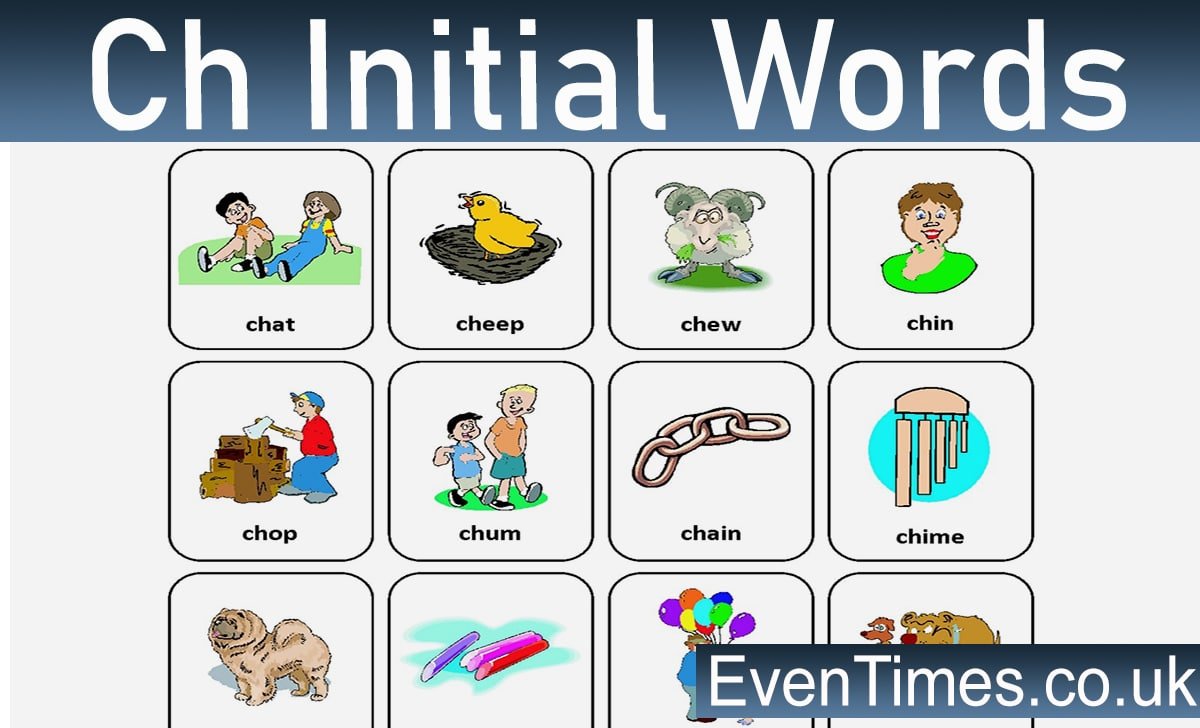
The English language contains thousands of words that begin with the distinctive “ch” sound, from simple everyday terms like “chair” and “cheese” to complex vocabulary like “chronological” and “chlorophyll.” These ch initial words represent one of the most fascinating aspects of English phonetics and etymology, offering insights into how our language has evolved through centuries of linguistic borrowing and sound changes.
Understanding ch initial words goes beyond mere vocabulary building. These words showcase the rich tapestry of English etymology, drawing from Greek, Latin, French, and Germanic origins. They demonstrate important pronunciation patterns that can help language learners master English sounds more effectively. Whether you’re a student expanding your vocabulary, a writer seeking more precise word choices, or simply someone curious about language patterns, exploring ch initial words reveals compelling stories about how English developed into the diverse language we use today.
This comprehensive guide will take you through the most important ch initial words, their meanings and origins, their role in literature and culture, practical tips for using them effectively, and how these words have evolved over time.
Common Ch Words and Their Meanings
The “ch” sound in English actually represents several different phonetic patterns, each with distinct origins and pronunciation rules. Most native speakers unconsciously navigate these variations, but understanding the patterns can enhance both vocabulary retention and pronunciation skills.
Hard Ch Sound (/k/)
Many ch initial words produce a hard “k” sound, typically derived from Greek origins. These words often relate to scientific, medical, or academic concepts:
Character refers to the distinctive qualities that define a person, literary figure, or symbol. This word stems from the Greek “kharakter,” meaning a stamping tool or distinctive mark.
Chemistry encompasses the scientific study of matter and its properties. The Greek root “khemeia” originally referred to the art of metalworking and later evolved to describe the transformation of substances.
Chronology describes the arrangement of events in time order. From Greek “khronos” (time) and “logos” (study), this word appears frequently in historical and scientific contexts.
Chaos represents complete disorder or confusion. The ancient Greeks used “khaos” to describe the void that existed before the creation of the universe.
Soft Ch Sound (/tʃ/)
The more familiar “ch” sound appears in words often derived from Old French or Germanic origins:
Chair denotes a seat with a back, typically for one person. This everyday word comes through Old French from Latin “cathedra,” which also gives us “cathedral.”
Change means to make or become different. This versatile word appears in countless contexts, from personal transformation to monetary transactions.
Challenge refers to a demanding task or invitation to compete. Originally meaning “to accuse” in Old French, the word evolved to encompass any form of difficult undertaking.
Chocolate describes the beloved food made from cacao beans. This word traveled through Spanish from Nahuatl “chocolatl,” representing one of many indigenous American words that entered English through European colonization.
French-Origin Ch Sound (/ʃ/)
Some ch initial words retain the French pronunciation, creating a “sh” sound:
Chef refers to a professional cook, especially the head cook in a restaurant. This word maintains its French pronunciation and has become standard in English culinary vocabulary.
Chauffeur describes a person employed to drive a car. The word literally means “stoker” in French, referring to early automobile drivers who had to stoke the engine.
Ch Words in Literature and Culture
Ch initial words have played significant roles in shaping literary expression and cultural understanding throughout English literature. Their varied origins and sounds provide writers with rich vocabulary options for creating mood, meaning, and memorable phrases.
Classic literature showcases the power of ch initial words in character development and thematic expression. Charles Dickens masterfully employed “character” not just as a literary device but as a central theme exploring human nature. His novel “A Christmas Carol” demonstrates how “change” can drive narrative arc, while “charity” and “cheerfulness” represent moral ideals worth pursuing.
William Shakespeare frequently used “chance” and “choice” to explore themes of fate versus free will. The contrast between these two concepts appears throughout his tragedies and comedies, highlighting fundamental questions about human agency and destiny.
Modern literature continues this tradition. Contemporary authors often use “chaos” to describe both external circumstances and internal psychological states. The word “challenge” appears regularly in coming-of-age narratives, representing the obstacles protagonists must overcome for personal growth.
Cultural expressions have elevated certain ch initial words to symbolic status. “Champion” carries connotations far beyond sports, representing anyone who advocates for a cause or excels in their field. “Charm” encompasses both magical properties and personal magnetism, bridging ancient superstitions with modern social dynamics.
Religious and philosophical traditions have imbued ch initial words with deep spiritual significance. “Church” represents not just a building but an entire community of believers. “Charity” appears as one of the cardinal virtues in Christian theology, while “compassion” serves as a central principle in Buddhist teachings.
Tips for Using Ch Words Effectively
Mastering ch initial words requires attention to both pronunciation patterns and contextual appropriateness. These strategies will help you incorporate these words more effectively into your vocabulary.
Pronunciation Mastery
Understanding the three main pronunciation patterns helps prevent common mistakes. Practice distinguishing between the hard “k” sound in “chemistry,” the soft “ch” sound in “chair,” and the “sh” sound in “chef.” Listen to native speakers and note which pattern applies to unfamiliar words.
Etymology often provides pronunciation clues. Greek-origin words typically use the hard “k” sound, while Germanic and Old French words usually employ the soft “ch” sound. French borrowings may retain their original “sh” pronunciation.
Contextual Selection
Choose ch initial words that match your audience and purpose. Scientific writing benefits from precise terms like “chronological” and “characteristic,” while casual conversation flows better with words like “chat” and “cheerful.”
Consider connotation alongside denotation. “Cheap” and “inexpensive” both describe low cost, but “cheap” often implies poor quality while “inexpensive” suggests good value.
Stylistic Applications
Ch initial words offer excellent opportunities for alliteration and sound patterns in creative writing. Phrases like “charming character” or “chaotic change” create memorable expressions through repeated sounds.
Vary your word choices to avoid repetition. Instead of repeatedly using “change,” consider alternatives like “transform,” “modify,” “alter,” or “shift” depending on the specific context and desired emphasis.
Building Vocabulary Systematically
Group ch initial words by meaning families to enhance retention. Study words related to time (chronology, chronicle, chronometer) together, or focus on words describing human qualities (character, charm, charisma).
Practice using new words in multiple contexts. Write sentences that demonstrate different meanings of versatile words like “charge,” which can refer to electrical energy, military attacks, financial costs, or responsibilities.
The Evolution of Ch Initial Words
The development of ch initial words reflects the broader history of English as a language shaped by conquest, trade, and cultural exchange. Understanding this evolution provides insight into why English spelling and pronunciation can seem so inconsistent.
Ancient Origins
Many ch initial words trace back to ancient Greek, where the letter chi (χ) represented a sound similar to the “ch” in German “ach.” When Romans borrowed Greek words, they adapted this sound using “ch” spelling, which medieval scribes later incorporated into Latin texts.
Greek scientific and philosophical vocabulary entered English through scholarly Latin during the Renaissance. Words like “chemistry,” “character,” and “chaos” arrived as learned borrowings, retaining their classical pronunciation and spelling patterns.
Medieval Transformations
The Norman Conquest of 1066 introduced French pronunciation patterns into English. Norman French speakers pronounced “ch” as we do today in words like “chair” and “change.” This created a layer of vocabulary with different pronunciation rules from the earlier Greek borrowings.
Old English already contained some words beginning with the “ch” sound, though spelled differently. The word “church” evolved from Old English “cirice,” while “child” developed from Old English “cild.” Medieval scribes gradually standardized the “ch” spelling for these sounds.
Modern Developments
The printing press helped standardize ch initial word spellings, though pronunciation continued evolving. Regional dialects developed different approaches to these sounds, contributing to the variation we observe in modern English.
Recent centuries have seen continued borrowing of ch initial words from other languages. “Chocolate” arrived through Spanish from indigenous American languages, while “chai” entered English directly from Hindi as global trade expanded cultural vocabulary.
Contemporary Usage
Modern technology and global communication continue adding new ch initial words to English. Computing terminology has introduced “chip,” “chat,” and “channel” in new technical contexts. Social media has popularized “check” as a verb meaning to examine or verify information quickly.
Professional vocabularies regularly adopt ch initial words for specialized meanings. Medical terminology employs numerous Greek-derived words beginning with “ch,” while culinary culture has embraced French-origin words like “chef” and “charcuterie.”
Frequently Asked Questions
Why do some ch words sound like “k” while others sound like “ch”?
The pronunciation difference typically reflects the word’s origin. Words derived from Greek usually maintain the hard “k” sound (like “chemistry” and “character”), while words from Germanic or Old French origins use the soft “ch” sound (like “chair” and “change”). This pattern developed because different languages had distinct pronunciation rules for the “ch” letter combination.
Are there rules for remembering ch word pronunciations?
Etymology provides the most reliable guide. Greek-origin words, especially those related to science, medicine, or philosophy, typically use the “k” pronunciation. Words related to everyday objects or activities often use the soft “ch” sound. When in doubt, consulting a dictionary’s pronunciation guide is always recommended.
How can I expand my vocabulary of ch words effectively?
Focus on word families and etymology. Study groups of related words together (like chronology, chronicle, and chronometer), and learn their common roots. Practice using new words in context rather than just memorizing definitions. Reading widely exposes you to natural usage patterns that help solidify new vocabulary.
Do other languages have similar ch sound patterns?
Many European languages contain similar “ch” letter combinations with varying pronunciations. German, Dutch, Spanish, and Italian all use “ch” combinations, though with different sound values. This variation reflects shared historical influences and explains why English borrowed words maintain different pronunciation patterns depending on their source language.
Mastering the Complexity of Ch Initial Words
Ch initial words represent one of English’s most intriguing linguistic features, combining etymology, phonetics, and cultural history in fascinating ways. From the ancient Greek origins of “chaos” and “character” to the French influences in “chair” and “change,” these words tell the story of English as a language enriched by centuries of contact with other cultures.
Understanding pronunciation patterns, etymological origins, and contextual usage transforms ch initial words from potential sources of confusion into powerful vocabulary tools. Whether you’re writing professionally, studying for exams, or simply exploring language for personal enrichment, these words offer endless opportunities for precise expression and clear communication.
The continuing evolution of English ensures that new ch initial words will keep joining our vocabulary. By understanding the patterns that govern existing words, you’ll be better equipped to master new additions and use this distinctive category of English vocabulary with confidence and skill.
