
Contents
Introduction
Have you ever seen beautiful, textured designs stitched on fabric and wondered how they were made? Chances are, you might have been looking at crewel embroidery. It’s a wonderful type of needlework that uses wool thread to create stunning patterns. If you’ve ever wanted to try a new craft that is both relaxing and creative, this might be the perfect hobby for you. Crewel embroidery has a rich history and is known for its bold, colorful designs. You don’t need to be an expert to get started. In fact, it’s a great craft for beginners.
This guide is here to walk you through everything you need to know about crewel embroidery. We will explore what makes it unique, the simple materials you’ll need, and the basic stitches that form the foundation of this art. I remember my first crewel project; I was nervous I would mess it up, but I was so proud of the little flower I stitched. The feeling of pulling the soft wool yarn through the fabric is incredibly satisfying. My goal is to help you feel that same joy. We’ll cover tips and tricks to make your first project a success, turning a simple piece of fabric into a work of art.
What Makes Crewel Embroidery Special?
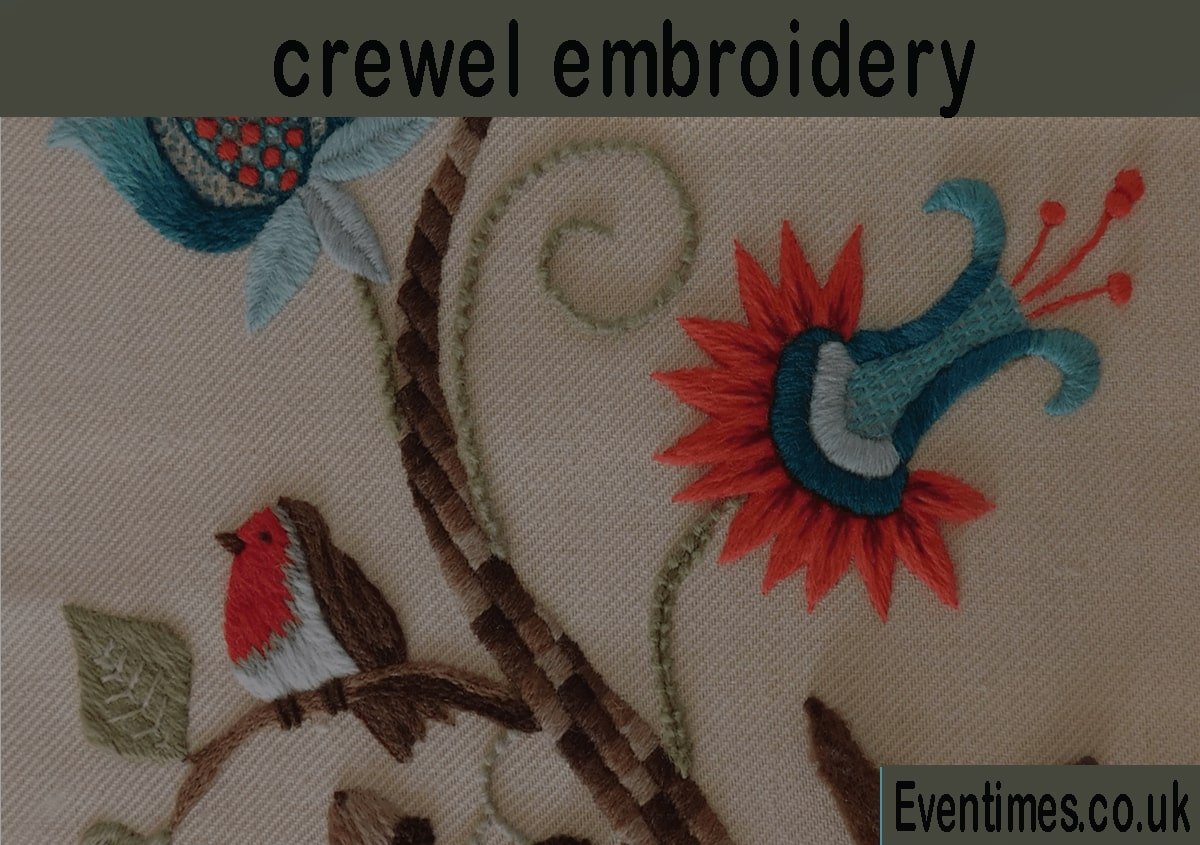
What sets crewel embroidery apart from other types of needlework is the specific thread used. This craft exclusively uses wool thread. The word “crewel” itself refers to the thin, worsted wool yarn used for stitching. This wool yarn is what gives the finished design its unique texture and slightly raised appearance. While other embroidery might use cotton floss or silk thread, crewel work is defined by its wool. This special yarn is strong and comes in a huge variety of beautiful colors, allowing for vibrant and durable designs that can last for generations. The use of wool gives projects a warm, cozy feel that is hard to achieve with other materials.
The fabric used in crewel embroidery is also important. Traditionally, stitches are made on a sturdy, woven fabric like linen twill. This type of fabric has a visible weave and is strong enough to support the weight of the heavy wool stitches without puckering or tearing. Modern kits might include other fabrics like jacquard or even heavy cotton canvas. The key is that the material needs to be tough. The combination of thick wool thread and a durable background fabric is the signature of classic crewel embroidery, creating a style that is both rustic and elegant.
A Brief History of Crewel Embroidery
Crewel embroidery has been around for a very long time. In fact, it dates back over a thousand years. One of the most famous examples is the Bayeux Tapestry, which was created in the 11th century. This incredible piece of art tells the story of the Norman conquest of England. It is a massive embroidered cloth, stretching nearly 230 feet long. Historians believe it was stitched with wool yarn on a linen background, making it a spectacular example of early crewel work. This shows that people have been using wool to create detailed pictures and stories on fabric for centuries. It’s amazing to think that when you pick up a needle and wool, you are connecting with such a long and fascinating history.
The craft became extremely popular in England during the 17th century, a period known as the Jacobean era. During this time, crewel embroidery was used to decorate all sorts of things in the home, from bed curtains to clothing. The designs were often inspired by nature, featuring elaborate patterns of twisting vines, large flowers, birds, and other animals. These Jacobean designs are still very popular in crewel embroidery today. People loved the rich textures and vibrant colors that wool thread could create. This historical art form has been passed down through generations, and it continues to be a beloved craft for its beauty and tradition.
Essential Supplies for Getting Started
Getting started with crewel embroidery is exciting, and you only need a few basic supplies. The most important item is, of course, the crewel wool. This two-ply wool yarn is what defines the craft. You can find it in specialty needlework shops or online. It comes in a beautiful array of colors, so you can let your creativity run wild. When I first started, I bought a small multi-color pack of wool to experiment with. This helped me see which colors I enjoyed working with most without having to buy large amounts of each.
Next, you will need a suitable fabric. Linen twill is the traditional choice because its strong, diagonal weave can hold the heavy wool stitches securely. If you can’t find linen twill, other sturdy fabrics like cotton canvas, denim, or even some heavy upholstery fabrics can work well. The goal is to choose a material that won’t stretch or warp as you stitch. You will also need a set of crewel needles, which are also called chenille needles. These needles have a large eye to accommodate the thick wool thread and a sharp point to easily pierce the fabric. They come in various sizes, so it’s good to have a small assortment on hand.
Finally, an embroidery hoop or frame is a must-have. A hoop holds your fabric taut, which is very important for creating even, neat stitches. Without one, your fabric can pucker, and your design might look distorted. Hoops come in many sizes, but a 6- or 8-inch hoop is a great size for beginners. You will also need a pair of small, sharp scissors for snipping your thread cleanly. With these few items wool, fabric, needles, and a hoop—you are fully equipped to begin your first crewel embroidery project.
Choosing the Right Fabric and Needles
Choosing the right fabric is one of the most important steps in crewel embroidery. Because you are working with heavy wool thread, you need a fabric that is strong and durable. Linen twill is the classic choice and for good reason. Its tight, diagonal weave provides excellent support for the stitches, preventing them from pulling the fabric out of shape. It is a wonderfully traditional material that feels great to work on. However, other fabrics can also be used. Look for materials with a firm, even weave. Heavy cotton, denim, or even a light canvas can be suitable alternatives for your crewel embroidery projects.
Just as important as the fabric are the needles. For crewel embroidery, you will need what are known as chenille needles. These are different from standard sewing needles. Chenille needles have a very large eye, which makes threading the thick wool yarn much easier. Trust me, trying to thread crewel wool through a small needle eye is incredibly frustrating! They also have a very sharp point, which is necessary for piercing through the dense weave of fabrics like linen twill. Chenille needles are available in a range of sizes, from about 13 to 26. A lower number indicates a larger, thicker needle. For most crewel work, a size 18 or 20 needle is a great place to start.
Basic Crewel Stitches Every Beginner Should Know
Once you have your supplies, it’s time to learn a few basic stitches. The great thing about crewel embroidery is that you can create beautiful designs with just a handful of simple stitches. One of the most fundamental is the outline stitch, also known as the stem stitch. This stitch is perfect for creating lines and outlining shapes, like the stems of flowers or the borders of a design. It creates a slightly slanted, rope-like line that is both decorative and strong. I use this stitch in almost every project; it’s that versatile.
Another essential stitch is the satin stitch. This is a type of fill stitch, meaning it’s used to color in areas of your design. The satin stitch consists of a series of straight stitches laid closely together to create a smooth, solid block of color. It’s perfect for filling in leaves, flower petals, or any shape you want to be completely covered. The key to a good satin stitch is keeping your stitches even and close together. Finally, the French knot is a wonderful decorative stitch that adds texture and detail. It looks like a tiny, raised dot and is great for creating flower centers or small accents. It might seem tricky at first, but with a little practice, you’ll be making perfect knots in no time.
Finding and Transferring a Design
Before you can start stitching, you need a design. For your first crewel embroidery project, it’s a good idea to start with a simple pattern. You can find countless designs online, in embroidery books, or by purchasing a pre-made kit. Kits are a fantastic option for beginners because they come with everything you need, including the fabric with the pattern already printed on it, the correct wool colors, and a needle. This takes all the guesswork out of getting started and lets you focus on learning the stitches. My first project was a kit, and it gave me the confidence to eventually create my own designs.
If you find a pattern you love that isn’t in a kit, you’ll need to transfer it onto your fabric. There are several ways to do this. One of the easiest methods is using a light source, like a lightbox or even a sunny window. Simply tape your pattern to the window, place your fabric over it, and you should be able to see the design through the fabric. Then, you can trace the lines with a water-soluble fabric pen or a pencil. Another popular method is using transfer paper. You place the transfer paper between your pattern and your fabric and trace over the design, which transfers the lines onto the material below.
Tips for Keeping Your Stitches Neat
One of the goals in any embroidery project is to have neat, even stitches. In crewel embroidery, this is especially important because the thick wool can easily look messy if not handled correctly. A great tip for keeping your stitches tidy is to use an embroidery hoop or frame. This keeps your fabric tight and prevents it from puckering as you stitch, which is a common problem. Make sure your fabric is “drum-tight” in the hoop before you start. This smooth, firm surface makes it much easier to guide your needle and create consistent stitches.
Another helpful tip is to manage your thread tension. This means not pulling your stitches too tight or leaving them too loose. If you pull the wool too tightly, the fabric will pucker. If the stitches are too loose, they can look sloppy and get snagged. Aim for a tension where the stitch lies flat against the fabric without distorting it. It can take some practice to find the right feel. I learned to let the wool glide through my fingers to control the tension as I stitch. Also, try to keep your stitches consistent in size and length, especially when filling an area or creating an outline.
How to Finish and Display Your Work
After you have placed your final stitch, you are ready to finish your crewel embroidery piece. The first step is to gently wash it. Even with clean hands, the oils from your skin and dust in the air can settle on your project. To wash it, fill a basin with cool water and a small amount of gentle soap, like a wool-safe detergent. Submerge your embroidery and let it soak for about 15 minutes. Gently swish it around, but avoid rubbing or wringing it, as this can damage the wool stitches. Rinse it thoroughly in cool water until all the soap is gone.
Once it’s clean, lay your piece flat on a clean, dry towel. Roll up the towel with the embroidery inside to gently squeeze out the excess water. Then, unroll it and lay it flat to air dry. If your design has any tracing marks from a water-soluble pen, they should disappear during this washing process. When it’s nearly dry, you can place it face down on a thick, fluffy towel and press it with an iron on a low setting. The towel protects the raised stitches from being flattened. Once dry and pressed, your crewel embroidery is ready to be displayed. You can frame it in a traditional picture frame, leave it in the embroidery hoop for a modern look, or even sew it into a decorative pillow.
Common Mistakes to Avoid
When you are learning any new skill, it’s normal to make a few mistakes along the way. In crewel embroidery, one of the most common errors for beginners is choosing the wrong fabric. Using a fabric that is too thin or stretchy, like a t-shirt jersey, will cause a lot of frustration. The material will pucker and pull under the weight of the wool stitches, and your design will look distorted. Always stick with a sturdy, non-stretch fabric like linen or heavy cotton to provide a stable foundation for your beautiful crewel work.
Another common mistake is using a piece of wool thread that is too long. It might seem efficient to use a very long thread to avoid re-threading your needle often, but it usually leads to problems. Long threads are much more likely to get tangled and form knots as you stitch. They can also become frayed from being pulled through the fabric so many times, which makes the stitches look worn and fuzzy. A good rule of thumb is to use a length of wool that is no longer than the distance from your fingertips to your elbow. This is a manageable length that will help keep your stitches looking fresh and neat.
Where to Find Inspiration for Projects
Inspiration for your crewel embroidery projects is all around you. Nature is one of the biggest sources of ideas, just as it was for embroiderers centuries ago. Look at the flowers in your garden, the patterns on leaves, or the shapes of birds. You can take photos or sketch these elements to create your own unique designs. Jacobean embroidery, with its stylized flowers and curving vines, is a timeless style that continues to inspire modern crewel artists. You can find many books and online resources dedicated to these traditional patterns.
Don’t be afraid to look at other art forms for inspiration as well. The patterns on a piece of pottery, the colors in a painting, or the design of a vintage fabric can all spark an idea for a crewel embroidery project. Social media platforms like Pinterest and Instagram are also fantastic places to find inspiration. You can see what other embroiderers are creating, discover new techniques, and connect with a community of fellow crafters. Following artists whose work you admire can be a great way to stay motivated and get fresh ideas for your next piece of crewel embroidery.
The Next Step in Your Crafting Journey
Now that you have a solid understanding of crewel embroidery, you are ready to take the next step. The best way to improve is simply to practice. Start with a small, simple project to build your confidence. A kit is a wonderful way to begin, as it removes any stress about choosing materials and allows you to focus purely on the joy of stitching. As you complete more projects, you will become more comfortable with the stitches and develop your own style. Don’t be afraid to experiment with different colors, stitches, and designs. This is your art, and there are no rules.
If you’ve enjoyed learning about crewel embroidery and feel excited to try it, I encourage you to gather your supplies and give it a go. There is a deep sense of satisfaction that comes from creating something beautiful with your own two hands. Joining an online community or a local stitching group can also be a wonderful way to share your progress, ask for advice, and feel connected to other crafters. Happy stitching!
Frequently Asked Questions
Is crewel embroidery hard to learn?
Not at all! Crewel embroidery is actually very beginner-friendly. While the finished projects can look complex and detailed, they are often created with just a few basic stitches. Stitches like the outline stitch and satin stitch are easy to master with a little practice. Because the wool thread is thick, projects can also be completed more quickly than those using finer threads.
What is the difference between crewel and regular embroidery?
The main difference lies in the thread used. Crewel embroidery exclusively uses two-ply wool thread, which is called “crewel.” Other types of embroidery, often called surface embroidery, can use a variety of threads, including cotton floss, silk, or rayon. The fabric is also typically different, with crewel work using a heavier fabric like linen twill to support the wool.
Can I use cotton embroidery floss for crewel work?
Traditionally, no. The defining characteristic of crewel embroidery is the use of wool thread. If you use cotton floss, you would be doing surface embroidery, not crewel work. The wool gives crewel its signature texture and raised look, which you wouldn’t get with cotton.
How do I care for my finished crewel piece?
Finished crewel embroidery pieces should be hand-washed gently in cool water with a mild, wool-safe soap. Avoid wringing or twisting the fabric. Roll it in a towel to remove excess water and lay it flat to dry. To protect the raised stitches, iron it from the back on a low setting with a fluffy towel underneath.
What is the best fabric for crewel embroidery?
The best fabric is a sturdy, woven material that can support the weight of the wool stitches without puckering. Linen twill is the traditional and most highly recommended choice. Other good options include heavy cotton, canvas, denim, and jacquard fabrics. Avoid stretchy or lightweight fabrics.
Where can I buy crewel embroidery supplies?
You can find crewel embroidery supplies at specialty needlework stores, both local and online. Many craft stores also carry basic supplies like embroidery hoops and chenille needles. For a wider selection of crewel wool and traditional linen fabric, online retailers dedicated to needlecraft are often your best bet.
