
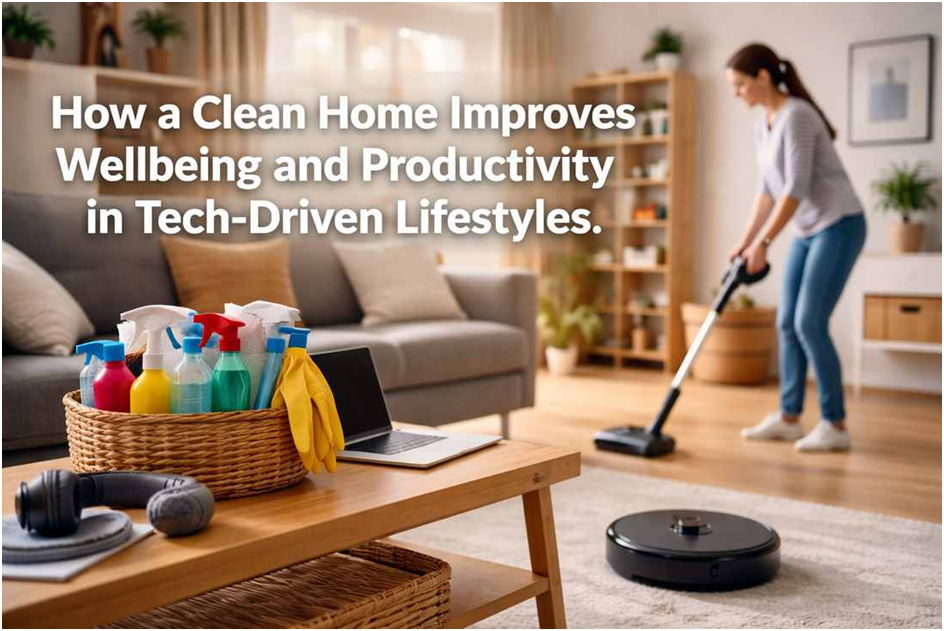
Modern lifestyles are increasingly shaped by technology. Many people now work, relax, and socialise within the same living space. Home offices, entertainment systems, smart devices, and always-connected tools have become everyday essentials. While technology has improved convenience, it has also changed how our living environments affect mental focus, physical comfort, and daily productivity.
In tech-driven homes, cleanliness plays a much larger role than most people realise. A clean and well-maintained environment supports concentration, reduces stress, and helps technology perform more reliably. When homes become cluttered or poorly maintained, the impact is often felt in subtle but persistent ways.
Understanding the connection between cleanliness, wellbeing, and productivity can help households create healthier and more effective living spaces without dramatic lifestyle changes.
Contents
The Changing Role of the Home Environment
Homes were once places primarily associated with rest. Today, they serve multiple functions at once. Many people now work remotely, attend virtual meetings, manage digital projects, and unwind with streaming platforms or gaming systems, all within the same space.
This shift has increased the importance of the home environment. Lighting, airflow, organisation, and cleanliness all influence how comfortable and focused people feel throughout the day. When these factors are neglected, even advanced technology cannot compensate for an uncomfortable or distracting setting.
A clean home supports mental clarity. When the environment feels orderly, it becomes easier to focus on tasks and transition between work and personal time.
Clutter, Stress, and Mental Fatigue
Visual clutter creates cognitive noise. Studies have shown that messy environments can make it harder to concentrate and increase feelings of stress. In homes where screens and devices are already competing for attention, additional clutter can amplify mental fatigue.
Dust, unorganised surfaces, and untidy rooms create constant low-level distractions. Even when people are not consciously aware of them, these visual signals affect mood and concentration.
Keeping living spaces clean and organised helps reduce mental load. This does not mean maintaining a perfectly styled home at all times. It simply means creating an environment where unnecessary distractions are minimised.
Cleanliness and Work-From-Home Productivity
Remote work has blurred the boundary between professional and personal life. Without clear separation, many people struggle to stay productive during work hours and to relax afterward.
A clean workspace supports better work habits. When desks are free from dust and clutter, and surrounding areas are well maintained, it becomes easier to focus on tasks and maintain a sense of structure.
Clean environments also support better routines. Simple habits such as starting the day in a tidy space can influence motivation and consistency throughout the day.
Indoor Air Quality and Daily Comfort
Cleanliness affects more than what is visible. Dust and airborne particles influence indoor air quality, which directly impacts comfort and wellbeing. Poor air quality can contribute to headaches, fatigue, and difficulty concentrating.
In tech-driven homes, where air conditioning and electronics are used frequently, dust accumulation can become more pronounced. Particles circulate through ventilation systems and settle on surfaces that are not always easy to reach.
Regular cleaning helps reduce airborne irritants and supports a more comfortable indoor environment. This is especially important for households that spend long hours indoors.
Technology Performance and Clean Living Spaces
Electronics are sensitive to dust and environmental conditions. Computers, gaming consoles, and home entertainment systems rely on airflow to regulate temperature. When dust accumulates, devices may overheat, slow down, or require more frequent maintenance.
Clean living spaces help technology perform more consistently. By reducing dust and debris in the environment, households lower the strain placed on their devices.
This connection between cleanliness and technology performance is often overlooked, yet it plays a role in long-term device reliability and comfort.
Clean Homes and Emotional Wellbeing
A clean environment contributes to emotional wellbeing. When homes feel fresh and organised, people often report feeling calmer and more in control. This sense of order supports positive daily habits and reduces background stress.
In busy households, maintaining cleanliness can feel overwhelming. However, consistency matters more than perfection. Establishing manageable routines helps prevent mess from accumulating and becoming a source of anxiety.
Some households choose to rely on professional support to maintain this balance. In urban settings, it is common for families to engage services such as Singapore Cleaning Service to help manage ongoing home maintenance while focusing on work and personal commitments.
Consistency Matters More Than Occasional Deep Cleaning
Many people approach cleaning in bursts. They allow mess to accumulate and then spend long hours catching up. While this may work occasionally, it often leads to fatigue and inconsistency.
A more effective approach is regular maintenance. Smaller, consistent cleaning sessions prevent build-up and make homes easier to manage. This approach supports both mental wellbeing and practical efficiency.
Consistency also helps maintain healthier indoor conditions. Dust and allergens are less likely to accumulate when cleaning is done regularly rather than sporadically.
Weekly Routines and Lifestyle Balance
Establishing a weekly cleaning rhythm can significantly improve household balance. When cleaning becomes part of a predictable routine, it reduces decision fatigue and mental clutter.
For households with demanding schedules, a weekly house cleaning service can provide structure and reliability. Instead of reacting to mess when it becomes overwhelming, regular maintenance keeps the home environment stable and comfortable.
This consistency supports better focus, smoother daily routines, and a more pleasant living space without constant effort.
Clean Spaces and Sleep Quality
Cleanliness also influences sleep. Bedrooms that are free from dust, clutter, and lingering odours promote better rest. Clean bedding, well-ventilated rooms, and organised surroundings contribute to a sense of calm at the end of the day.
Quality sleep is essential for productivity, mood, and overall health. By maintaining clean sleeping environments, households support better recovery and energy levels.
This connection highlights how cleanliness influences wellbeing beyond waking hours.
Social Comfort and Confidence at Home
Clean homes also support social wellbeing. When living spaces are well maintained, people feel more comfortable inviting others into their homes. This confidence supports social connections and reduces anxiety around hosting guests.
Even for households that rarely entertain, knowing that the home is consistently clean provides peace of mind. It removes the pressure of last-minute cleaning and creates a more relaxed atmosphere.
Cleaning as Part of a Healthy Lifestyle
Cleanliness should be viewed as part of a broader healthy lifestyle. Alongside nutrition, movement, and rest, the living environment plays a role in how people feel and function daily.
In tech-driven lifestyles, where screens dominate attention, physical surroundings become even more important. Clean spaces help counterbalance digital overload by creating calm and supportive environments.
By prioritising cleanliness, households invest in both physical comfort and mental clarity.
Making Cleanliness Sustainable
The key to maintaining a clean home is sustainability. Overly ambitious cleaning plans often lead to burnout. Simple routines, realistic expectations, and occasional support help make cleanliness achievable long term.
Households should focus on systems rather than perfection. Clear storage, regular schedules, and shared responsibilities reduce friction and make cleaning easier to maintain.
When cleanliness becomes part of daily life rather than an occasional project, its benefits compound over time.
Practical Considerations for Modern Homes
Every household is different. Space, lifestyle, and technology use all influence cleaning needs. Understanding these factors helps households choose the right approach for their situation.
For some, basic routines are enough. For others, additional support helps maintain balance. The goal is not to eliminate effort entirely, but to create an environment that supports wellbeing and productivity rather than working against it.
Clean homes provide a foundation for healthier, more focused, and more enjoyable living in an increasingly digital world.
