
Contents
Introduction
Do you love the feeling of solving a tough problem? There is nothing quite like that “aha!” moment when everything finally clicks into place. Puzzles have been a favorite pastime for humans for thousands of years. They challenge our minds and give us a great sense of accomplishment. Whether you are bored on a rainy day or just want to keep your brain sharp, there is a puzzle out there for you. Some people love holding a physical object and twisting it around until it is solved. Others prefer sitting quietly with a pencil and paper to work through clues.
The world of brain teasers is huge and full of variety. From simple games you play on your phone to complex boxes that take hours to open, the options are endless. Exploring different types of puzzles can help you find new ways to relax and have fun. In this guide, we are going to explore the many different categories of brain games available today. We will look at how they work and why they are so good for you. Get ready to exercise your mind and discover a whole new hobby that you can enjoy alone or with friends.
The Classic Jigsaw Puzzle
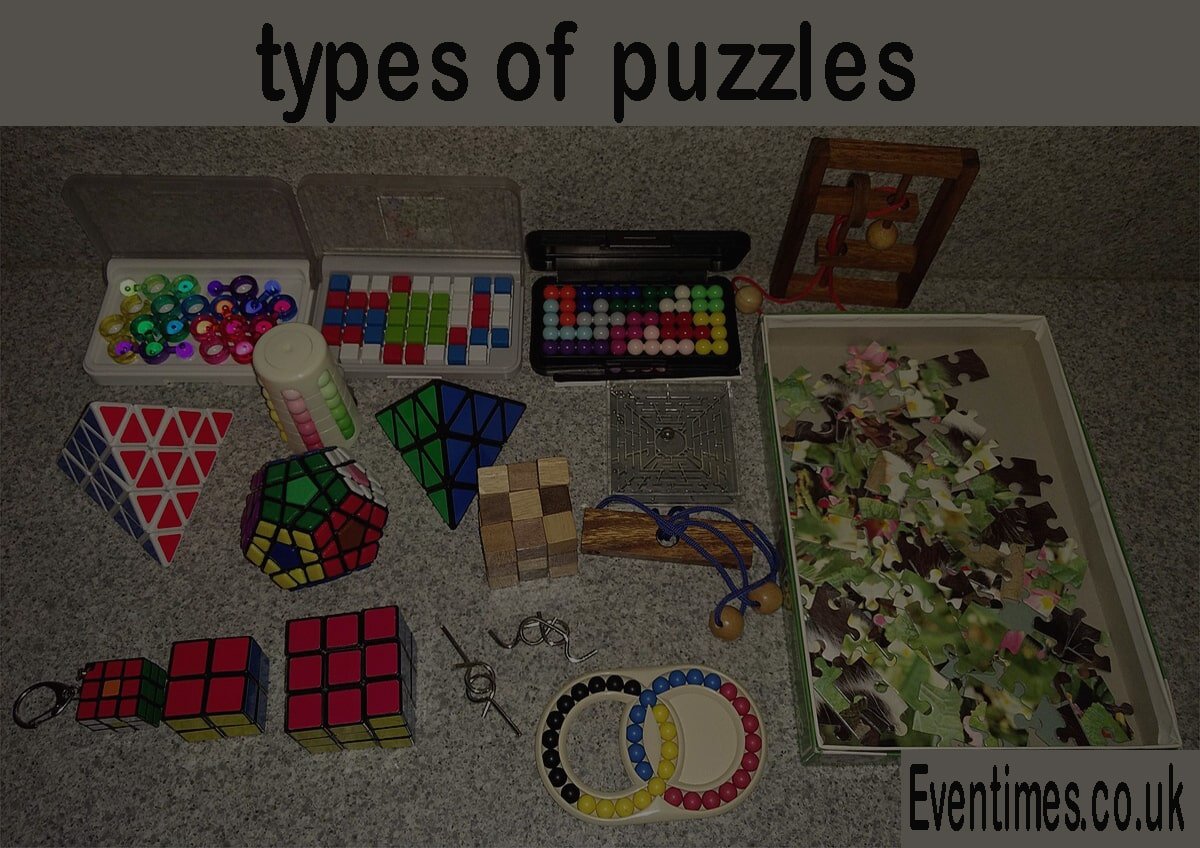
When most people think about puzzles, the first thing that comes to mind is the classic jigsaw. These are the ones where you have to fit many small, oddly shaped pieces together to form a complete picture. They can range from very simple wooden boards for toddlers to massive challenges with thousands of pieces for adults. The goal is always the same: recreate the image shown on the box. Most people start by finding the four corner pieces and then building the straight edges. Once the frame is built, you fill in the middle by matching colors and patterns.
Jigsaw puzzles are fantastic because they require a lot of patience and visual focus. You have to look closely at shapes and colors to see where a piece might fit. This is a great way to improve your short-term memory and your attention to detail. Many families love doing these together because you can chat while you work. It turns into a team effort where everyone contributes. Whether you like pictures of landscapes, animals, or famous art, there is a jigsaw puzzle out there that you will love building.
Crossword Puzzles for Word Lovers
If you love language and learning new words, crossword puzzles might be your perfect match. These have been a staple in newspapers for decades, and now you can find them in apps and books everywhere. A crossword consists of a grid of black and white squares. You are given a list of clues for words that go “across” and words that go “down.” Your job is to figure out the answer to the clue and write the letters into the white squares. The words cross over each other, so getting one answer right helps you solve the others.
Solving crosswords is one of the best ways to expand your vocabulary. You often learn new facts and words you might not use in daily conversation. It forces your brain to recall information quickly, which helps keep your mind sharp as you age. There are different difficulty levels, so beginners can start easy and experts can try the really hard ones. Some of the clues can be tricky or use puns, which makes solving them even more satisfying. It is a mental workout that feels like a game.
Sudoku and Number Grids
For those who prefer numbers over words, Sudoku is the king of logic puzzles. It became incredibly popular worldwide in the early 2000s and hasn’t slowed down since. A standard Sudoku grid has nine rows, nine columns, and nine smaller squares. The rule is very simple but challenging to follow. You must fill the grid so that every row, column, and smaller square contains the numbers 1 through 9. You cannot repeat a number in any of those sections. The puzzle starts with some numbers already filled in to get you started.
The great thing about Sudoku is that it does not actually require any math. You don’t need to add or subtract anything. It is purely a game of logic and deduction. You have to look at the open spaces and figure out what numbers are missing. This type of puzzle improves your concentration and logical thinking skills. It teaches you to look for patterns and use the process of elimination. Because it relies on logic, it is a very satisfying puzzle to solve. When you finally fill in that last square, you feel like a genius.
Mechanical and Disentanglement Puzzles
Mechanical puzzles are physical objects that you have to manipulate to solve. The most famous example of this is the Rubik’s Cube. These types of puzzles are tactile, meaning you hold them in your hands and move parts around. Some are made of wood, while others are metal or plastic. The goal might be to match up colors, take something apart, or untangle two pieces of twisted metal. They are perfect for people who like to fidget or work with their hands. You can take them with you anywhere.
Solving mechanical puzzles requires a different kind of thinking called spatial reasoning. You have to visualize how the pieces move and fit together in 3D space. It involves a lot of trial and error. You might twist a piece one way and realize it was a mistake, so you have to go back. This teaches resilience and persistence. You cannot force the pieces; you have to find the gentle, correct way to move them. It is a physical workout for your hands and a mental workout for your brain.
Logic Grid Puzzles
Logic grid puzzles are for the true detectives out there. These usually tell a short story or give a scenario, like “Five friends bought five different colors of shirts.” You are then given a list of clues, such as “Mary did not buy the red shirt,” or “The person who bought the blue shirt is named John.” You have to use a grid to mark off what is true and what is false. By crossing out the impossible options, you eventually find the one correct answer for each category.
These puzzles are pure brain exercises. They force you to use deductive reasoning. This means you take general rules and use them to reach a specific conclusion. It helps you learn how to think clearly and sequentially. You have to take the information step-by-step and not jump to conclusions. Logic grids are often used in schools to help students learn critical thinking. They can be very challenging, but solving them makes you feel very smart. It is like solving a mystery without leaving your chair.
Riddles and Lateral Thinking
Riddles are one of the oldest forms of brain teasers in history. A riddle is a question or statement that has a hidden meaning. You have to think creatively to find the answer. For example, “I have keys but no locks. I have space but no room. You can enter, but never go outside. What am I?” The answer is a keyboard. Riddles rely on wordplay and metaphors. They trick your brain into thinking one way, but the answer requires you to think in a completely different direction.
Lateral thinking puzzles are similar but usually involve a strange scenario. You might hear a story about a man who walks into a restaurant and orders a specific item, and then something weird happens. You have to figure out why. These types of puzzles are great for groups. One person knows the answer, and everyone else asks “yes” or “no” questions to figure it out. It teaches you to question your assumptions. You learn that the obvious answer is not always the right one. It opens up your mind to new possibilities.
Word Search Puzzles
Word search puzzles are very popular with both young kids and older adults. You are given a grid filled with random letters. Hidden inside that mess of letters is a list of specific words. The words can run horizontally, vertically, or diagonally. Sometimes they are even written backward! Your job is to circle or highlight the words as you find them. It sounds simple, but it can be quite tricky when the letters are packed tightly together. It is a classic way to pass the time.
This type of puzzle is excellent for pattern recognition. Your eyes have to scan the grid and pick out specific sequences of letters. It helps improve your spelling because you have to look for the correct order of letters for each word. It is also very relaxing. Unlike some other logic puzzles that might make your brain hurt, word searches are usually low-stress. You can do them while watching TV or waiting for an appointment. They offer a nice, gentle workout for your brain.
Cryptograms and Codes
Do you want to feel like a secret agent or a spy? Then cryptograms are the types of puzzles you should try. A cryptogram is a message written in code. Usually, it is a simple substitution cipher. This means that every letter in the alphabet is replaced by a different letter. for example, every “A” might be written as a “Q,” and every “B” might be a “Z.” You have to figure out the code to read the secret message. You look for patterns, like one-letter words (which are usually “I” or “a”) to get started.
Solving codes uses your knowledge of language and grammar. You have to think about which letters are used most often, like “E” or “T.” You also look for common words like “the” or “and.” It is a giant guessing game that relies on logic and intuition. When you crack the code, it is very exciting. It feels like you have unlocked a secret that no one else can see. People who love history and mysteries often enjoy these puzzles the most.
Rebus Puzzles
Rebus puzzles are visual brain teasers that use pictures, symbols, and letters to represent words or phrases. You might see a picture of an eye followed by a picture of a heart and the letter U. This translates to “I love you.” They can get much more complicated, using the position of words to create meaning. For example, the word “man” written on top of the word “board” would mean “Man Overboard.” These puzzles are often found on bottle caps or game shows.
These puzzles require you to think visually and verbally at the same time. You have to translate images into sounds. It is a fun way to test your knowledge of idioms and common sayings. Rebus puzzles are great for kids because they are playful and often funny. They teach you to look at things from a different perspective. Instead of just reading a word, you have to look at how it is written. Is it big? Is it small? Is it backwards? All of those things matter in a rebus puzzle.
Escape Rooms and Adventure Puzzles
In recent years, a new type of puzzle experience has become very famous: the escape room. This is a real-life adventure game. You and a group of friends are locked in a themed room, like a haunted house or a spaceship. You have to find clues, solve riddles, and open locks to “escape” the room before the time runs out. Usually, you have 60 minutes. These rooms combine many different types of puzzles into one big event. You might need to do some math, find a hidden key, and decode a message all in one game.
Escape rooms are amazing for building teamwork skills. You cannot solve everything on your own because there is too much to do. You have to communicate clearly with your friends. One person might be good at math, while another is good at searching for hidden items. It is a high-energy, exciting experience. It gets your adrenaline pumping because of the time limit. If you cannot go to a real escape room, there are also board games and video games that simulate the experience at home.
Why Puzzles Are Good for Your Brain
We have talked a lot about the different games you can play, but why should you play them? The answer is that puzzles are like a gym for your brain. When you challenge your mind, you build new connections between your brain cells. This improves your cognitive speed and your memory. Studies have shown that people who do puzzles regularly may keep their brains healthier as they get older. It keeps the mind active and engaged, rather than just passively watching screens.
Puzzles are also great for your emotional health. When you solve a puzzle, your brain releases a chemical called dopamine. This is the “feel-good” chemical that makes you feel happy and rewarded. It lowers your stress levels and helps you relax. Focusing entirely on a puzzle helps you forget about your worries for a while. It is a form of meditation. Whether you are doing a Sudoku or a jigsaw, you are giving your brain a healthy, happy workout.
How to Choose the Right Puzzle
With so many options, how do you pick the right one? First, think about what you enjoy. Do you like words? Try a crossword. do you like numbers? Grab a Sudoku. Do you like working with your hands? Buy a Rubik’s cube. You should also consider how much time you have. A mobile app puzzle can be done in five minutes, but a 1000-piece jigsaw might take a whole weekend. Don’t be afraid to try something new, either. You might discover a hidden talent.
Also, think about the difficulty level. If a puzzle is too hard, you might get frustrated and quit. If it is too easy, you will get bored. Look for something that feels like a challenge but is still doable. Many puzzle books are labeled with difficulty levels, so start with “easy” or “medium” and work your way up. The most important thing is to have fun. If you aren’t enjoying it, try a different type. There is a perfect puzzle out there for everyone.
Puzzles in the Digital Age
Technology has changed the way we solve puzzles. You no longer need to carry around a book or a box of pieces. You can download apps for almost all the types of puzzles we have discussed. This makes it very convenient to play whenever you have a spare moment. Digital puzzles often have helpful features, like hints or the ability to undo a mistake. This can make learning a new type of puzzle much easier and less frustrating for beginners.
However, many people still prefer the old-fashioned way. There is something special about holding a pencil or touching real puzzle pieces. It gives your eyes a break from screens. Physical puzzles can also be more social. It is hard to share a phone screen with a friend, but easy to share a puzzle on a table. Whether you choose digital or physical, the benefits for your brain are the same. It is great that we have so many ways to access these brain games today.
Frequently Asked Questions
What are the best types of puzzles for beginners?
If you are just starting out, word searches and simple jigsaw puzzles are great choices. They are easy to understand and don’t require complex rules. You can just dive in and start finding words or matching colors. Sudoku is also good if you start with the “easy” level, as it teaches you logic without needing math skills.
Do puzzles really help prevent memory loss?
Yes, many studies suggest that keeping your brain active can help delay memory loss. Engaging in mentally stimulating activities like puzzles builds “cognitive reserve.” This helps the brain cope better with aging. While it is not a guaranteed cure, it is a healthy habit that supports overall brain health.
How long should I spend on a puzzle each day?
You do not need to spend hours to get the benefits. Even just 15 to 20 minutes a day can be helpful. The goal is consistency rather than intensity. Doing a quick crossword over breakfast or a little Sudoku before bed is a great routine. It gives your brain a regular workout without becoming a chore.
Are there puzzles that are good for groups?
Absolutely! Jigsaw puzzles are the classic group activity because everyone can work on a section. Escape rooms are specifically designed for teams to solve together. Lateral thinking puzzles and riddles are also fun to solve with friends at a party or dinner. They spark conversation and teamwork.
Why do I get frustrated when solving puzzles?
Frustration is a normal part of the process. Puzzles are designed to be a challenge. If you get stuck, it means your brain is working hard to find a solution. If you feel too frustrated, take a break and come back later. Often, looking at it with fresh eyes helps you see the answer immediately.
Can video games count as puzzles?
Yes, many video games fall into the puzzle genre. Games like Tetris, Portal, or Candy Crush involve pattern recognition, logic, and problem-solving. As long as the game requires you to think and strategize rather than just react fast, it provides many of the same mental benefits as traditional puzzles.
