
Contents
Introduction
When working with metals, plastics, or alloys, one important property stands out—hardness. Hardness tells us how resistant a material is to indentation, wear, or scratching. From airplane wings to car parts, even down to the screws in your furniture, hardness plays a vital role in safety and durability.
Two popular ways of measuring hardness are the Webster test and the Rockwell test. Both methods are widely used in industries and labs, but they differ in how they work, the equipment used, and the level of accuracy they provide.
In this article, we’ll explore the Webster vs Rockwell hardness comparison in detail. We’ll look at their strengths, weaknesses, and practical applications. By the end, you’ll know exactly when to use each test and how to interpret the results with confidence.
What Is Hardness in Materials?
Before comparing Webster vs Rockwell hardness, let’s start with the basics. Hardness is a measure of how resistant a material is to deformation. If you press a tool into a material, hardness determines how easily it dents or scratches.
There are different types of hardness, such as:
- Scratch hardness – resistance to being scratched (like on a phone screen).
- Indentation hardness – resistance when pressed by a force.
- Rebound hardness – how well a material bounces back after impact.
For engineers and manufacturers, indentation hardness is the most practical measure. This is where both Webster and Rockwell hardness tests come into play. They provide a standardized way to compare materials and ensure quality control.
Why Do We Test Hardness?
Hardness testing is not just a science experiment it has real-world applications. Here are some reasons industries rely on hardness testing:
- Quality control: Ensures metals and alloys meet required standards.
- Safety assurance: Hardness affects strength, durability, and resistance to wear.
- Material selection: Engineers pick the right material for specific jobs.
- Failure analysis: Testing helps explain why a part broke or wore out early.
For example, airplane manufacturers need strong, lightweight metals. Car makers require parts that balance hardness with flexibility. By testing hardness, companies prevent costly failures and keep products safe.
Now let’s look closely at the two popular testing methods.
Overview of the Webster Hardness Test
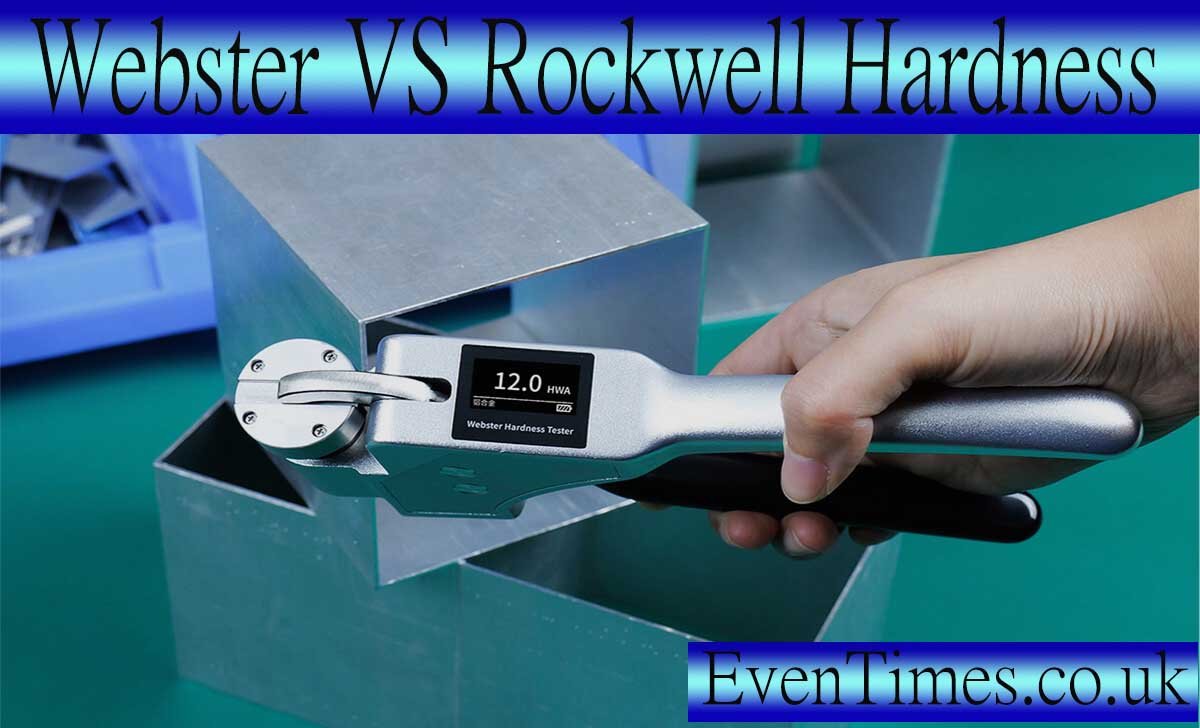
The Webster hardness test is a quick and portable way of checking hardness. It’s often used for softer materials like aluminum, copper, and brass.
- How it works: The tester is a handheld device that applies force through a spring-loaded indenter. The result is read directly from a dial.
- Advantages: Fast, easy to use, and requires no special setup. Perfect for on-site testing.
- Limitations: Less accurate than Rockwell and not suitable for very hard metals.
A great example is in the construction industry. When working with aluminum window frames, engineers use the Webster test to quickly confirm hardness on-site.
Overview of the Rockwell Hardness Test
The Rockwell hardness test is one of the most widely used methods in the world. Unlike the portable Webster tester, Rockwell testing requires a dedicated machine.
- How it works: A steel or diamond indenter is pressed into the material under a specific load. The machine measures the depth of the indentation and converts it into a hardness number.
- Advantages: Highly accurate, widely accepted in industry, and works on a variety of materials (metals, plastics, composites).
- Limitations: Requires larger equipment, not as portable, and more time-consuming compared to Webster.
For example, in automotive manufacturing, Rockwell testing is used to ensure engine components meet strict hardness standards.
Webster vs Rockwell Hardness: Key Differences
Here’s a simple breakdown of Webster vs Rockwell hardness:
| Feature | Webster Hardness | Rockwell Hardness |
|---|---|---|
| Equipment | Handheld, portable | Large machine |
| Materials | Soft metals (aluminum, copper) | Wide range (steel, alloys, plastics) |
| Accuracy | Lower | Higher |
| Use | Quick checks, field testing | Lab and factory quality control |
| Cost | Inexpensive | More costly |
In short, Webster is quick and convenient, while Rockwell is accurate and comprehensive.
Accuracy and Reliability of Both Tests
When accuracy matters most, Rockwell hardness is the gold standard. It gives precise results that are widely accepted in industry specifications and quality certifications.
The Webster hardness test, however, is more of a screening tool. It tells you if a material is in the right ballpark, but results can vary depending on user skill and surface conditions.
For high-stakes industries like aerospace or defense, Rockwell testing is preferred. But for everyday aluminum fabrication, Webster does the job.
When to Use Webster Hardness Testing
Webster hardness testing is best for:
- On-site testing where portability is key.
- Quick inspections on production lines.
- Soft alloys like aluminum, copper, and brass.
- Checking uniformity across multiple parts.
Imagine a contractor installing hundreds of aluminum beams. Using Rockwell on every beam would be slow and costly. Webster allows quick spot checks without slowing down the work.
When to Use Rockwell Hardness Testing
Rockwell hardness testing is ideal for:
- Detailed quality control in factories.
- Testing hard metals like steel and titanium.
- Producing certification reports for compliance.
- Comparing materials across industries.
For example, an aerospace engineer must prove that titanium components meet strict hardness standards. Only Rockwell can provide the level of detail required.
Pros and Cons of Webster vs Rockwell Hardness
Webster Pros:
- Portable
- Affordable
- Easy to use
Webster Cons:
- Less accurate
- Limited to softer materials
Rockwell Pros:
- Highly accurate
- Works on many materials
- Industry standard
Rockwell Cons:
- Expensive equipment
- Not portable
- Requires trained operators
Both tests have their place depending on the job.
Common Industries Using These Tests
- Construction: Webster for quick aluminum checks.
- Aerospace: Rockwell for critical titanium and steel components.
- Automotive: Rockwell for engines, Webster for trim parts.
- Manufacturing: Both used depending on the part.
- Quality labs: Mostly Rockwell for formal certifications.
The choice often depends on how important accuracy is versus convenience.
How to Read and Compare Hardness Results
Webster gives results on its own scale, while Rockwell uses a system of letters (like HRB, HRC) and numbers.
- A higher number means harder material.
- Results are not directly interchangeable between Webster and Rockwell.
- Conversion charts exist, but accuracy can vary.
So, if you test with Webster and need Rockwell numbers, use caution. Always confirm critical results with a Rockwell test.
Alternatives to Webster and Rockwell Testing
Besides Webster vs Rockwell hardness, there are other methods:
- Brinell hardness test: Uses a steel ball, great for castings.
- Vickers hardness test: Uses a diamond pyramid, very precise.
- Mohs scale: Simple scratch test (used for minerals).
Each method has its own advantages. Engineers choose based on material type, cost, and required accuracy.
Expert Tips for Choosing the Right Hardness Test
- Know your material. If it’s aluminum, Webster is fine. If it’s hardened steel, go Rockwell.
- Think about location. Need to test on-site? Choose Webster. In a lab? Rockwell.
- Consider your budget. Rockwell machines are costly; Webster tools are affordable.
- Check industry standards. Some industries require Rockwell certification.
- Don’t mix results. Use proper conversion charts if you need to compare.
FAQs
1. What is the main difference between Webster and Rockwell hardness?
The Webster test is quick, portable, and good for softer metals. Rockwell is more accurate, works on a wider range of materials, and is the industry standard for certification.
2. Which is more accurate: Webster or Rockwell?
Rockwell hardness is more accurate and reliable. Webster provides approximate values and is better for quick checks.
3. Can Webster hardness be converted to Rockwell?
Yes, but not perfectly. Conversion charts exist, but results may vary. Always use Rockwell testing for critical applications.
4. Why do engineers prefer Rockwell hardness?
Because it offers precision, repeatability, and global acceptance in material standards.
5. Is Webster hardness good for aluminum testing?
Yes. In fact, it’s one of the most common tools for checking aluminum hardness quickly on-site.
6. Do I need special equipment for these tests?
Yes. Webster requires a handheld tester, while Rockwell needs a larger, specialized machine.
Conclusion
When comparing Webster vs Rockwell hardness, the choice depends on your needs. If you want speed and portability, Webster hardness is a reliable option for softer metals. If you need accuracy and certification, Rockwell hardness is the gold standard across industries.
Both methods are valuable, and often, companies use them together Webster for quick checks and Rockwell for final validation.
Whether you’re a student, engineer, or industry professional, understanding hardness testing helps you select the right materials, maintain safety, and ensure quality.
